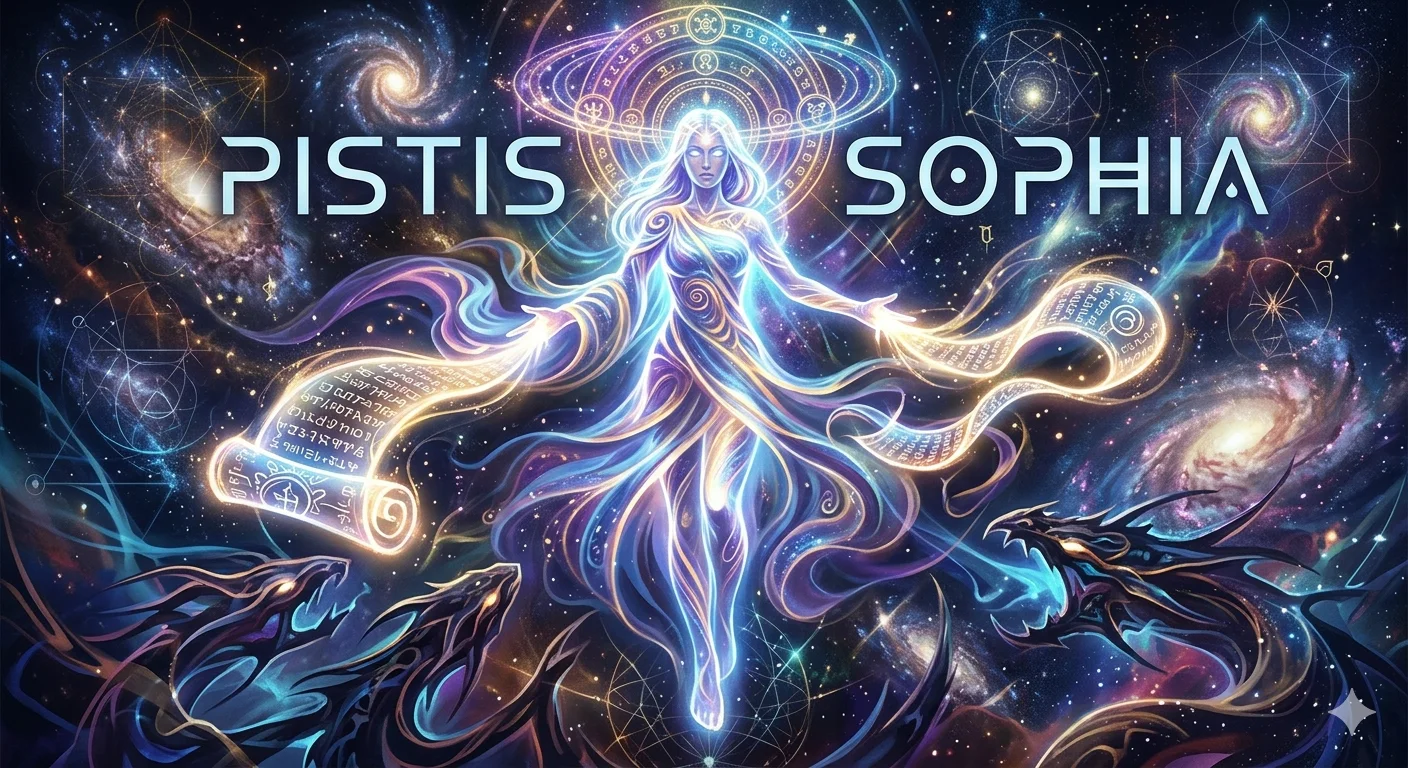
Before the First Dawn
Before time could count its first moment, before the birth of stars, before any world drifted through the silent sea of space, there was only the Fullness. The Pleroma. It was not a kingdom, nor a heaven built from stone and rule. It had no beginning and no end, and within it nothing was missing, nothing was broken, nothing longed for more.
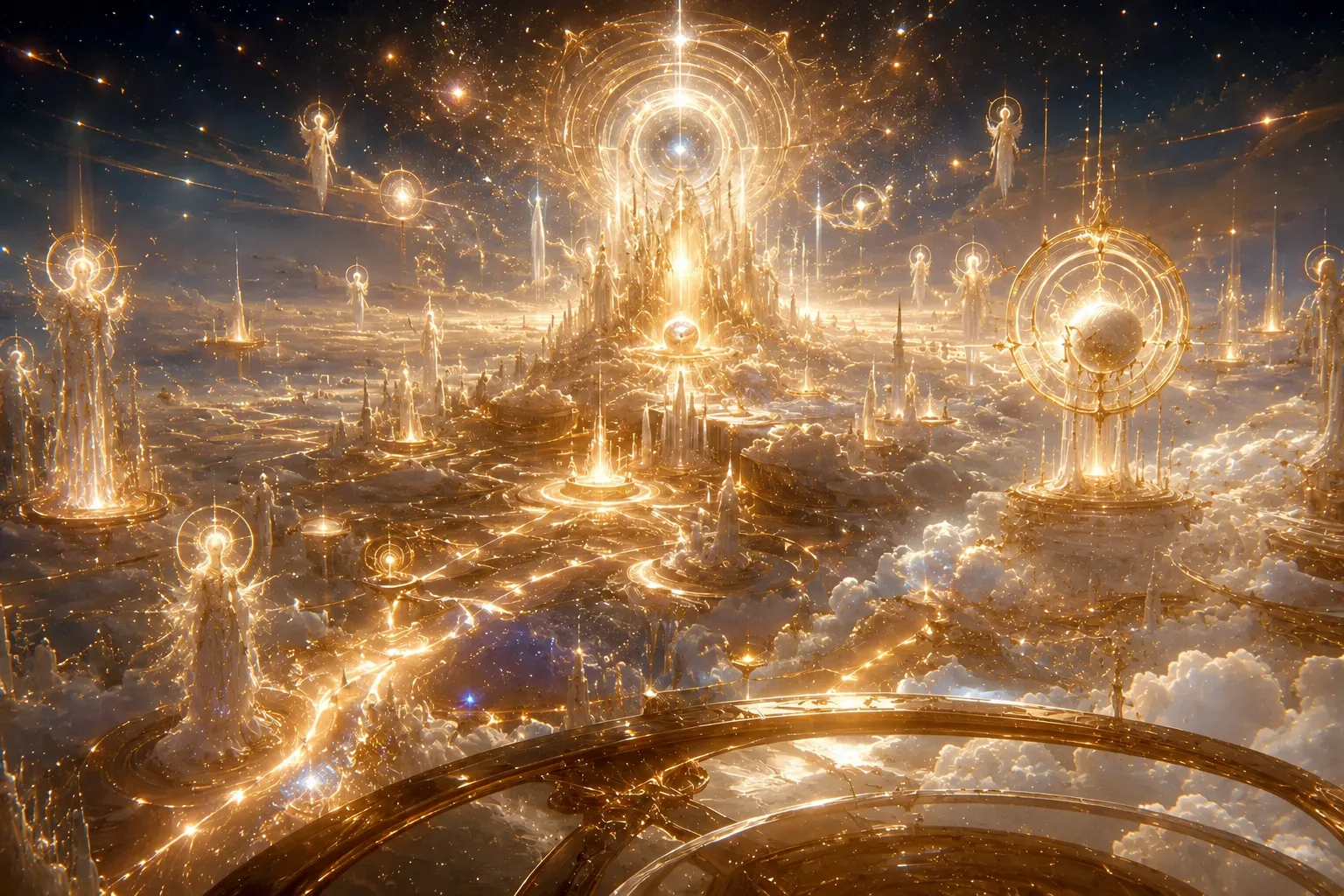
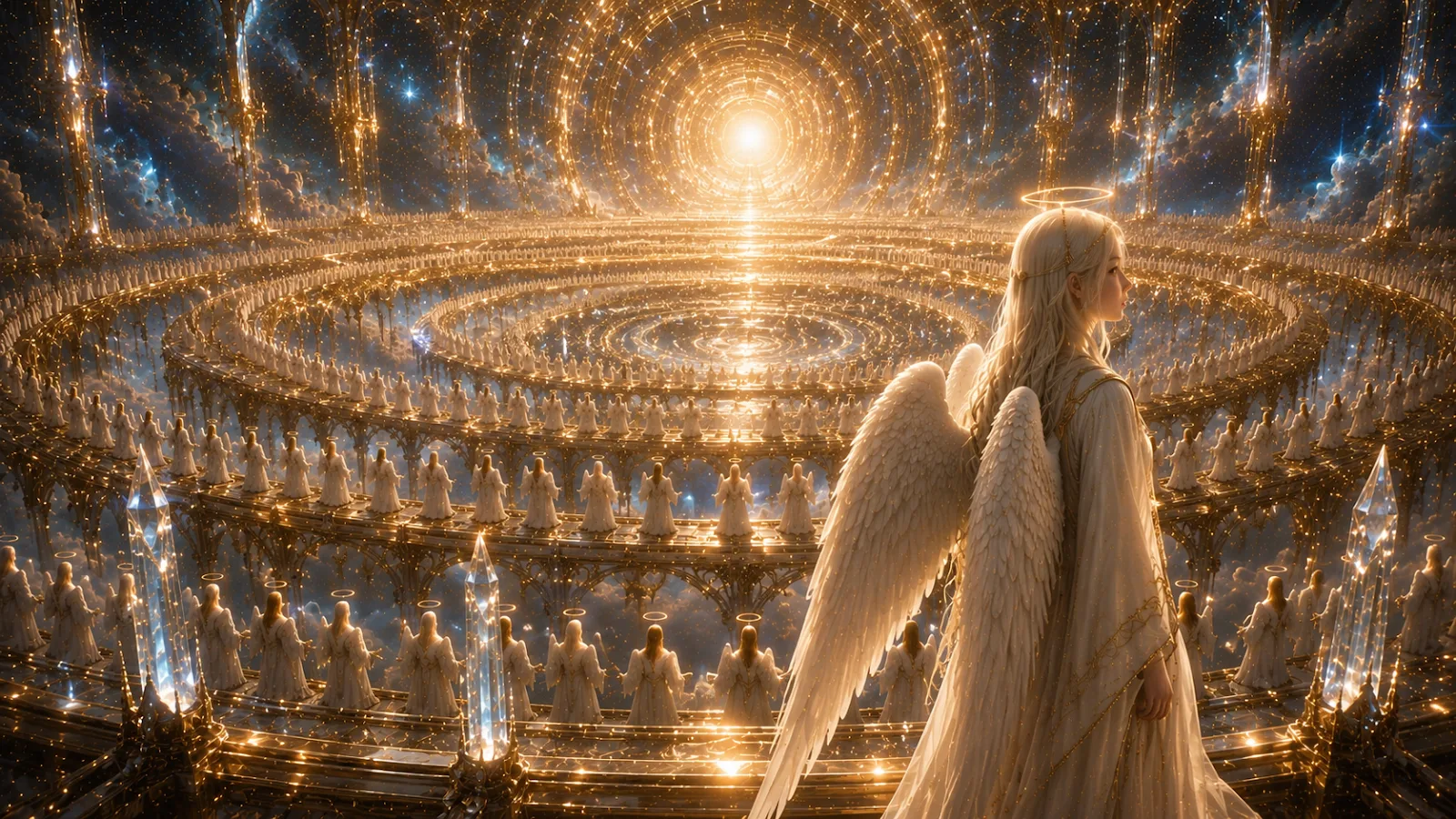
Here dwelled the Aeons, the living lights born of the unknowable Father, the Hidden One, the Ineffable Light beyond all naming. They moved always in pairs. Each Aeon was bound to its complement, each light answered by another light, each voice by a voice, so that no work was ever made by one will alone, and no note in the eternal Song was ever sung without its answer. They knew no conflict, no ambition, no fear. The Ineffable Light poured itself endlessly into them, and the whole ocean of living light sang one eternal Chorus.
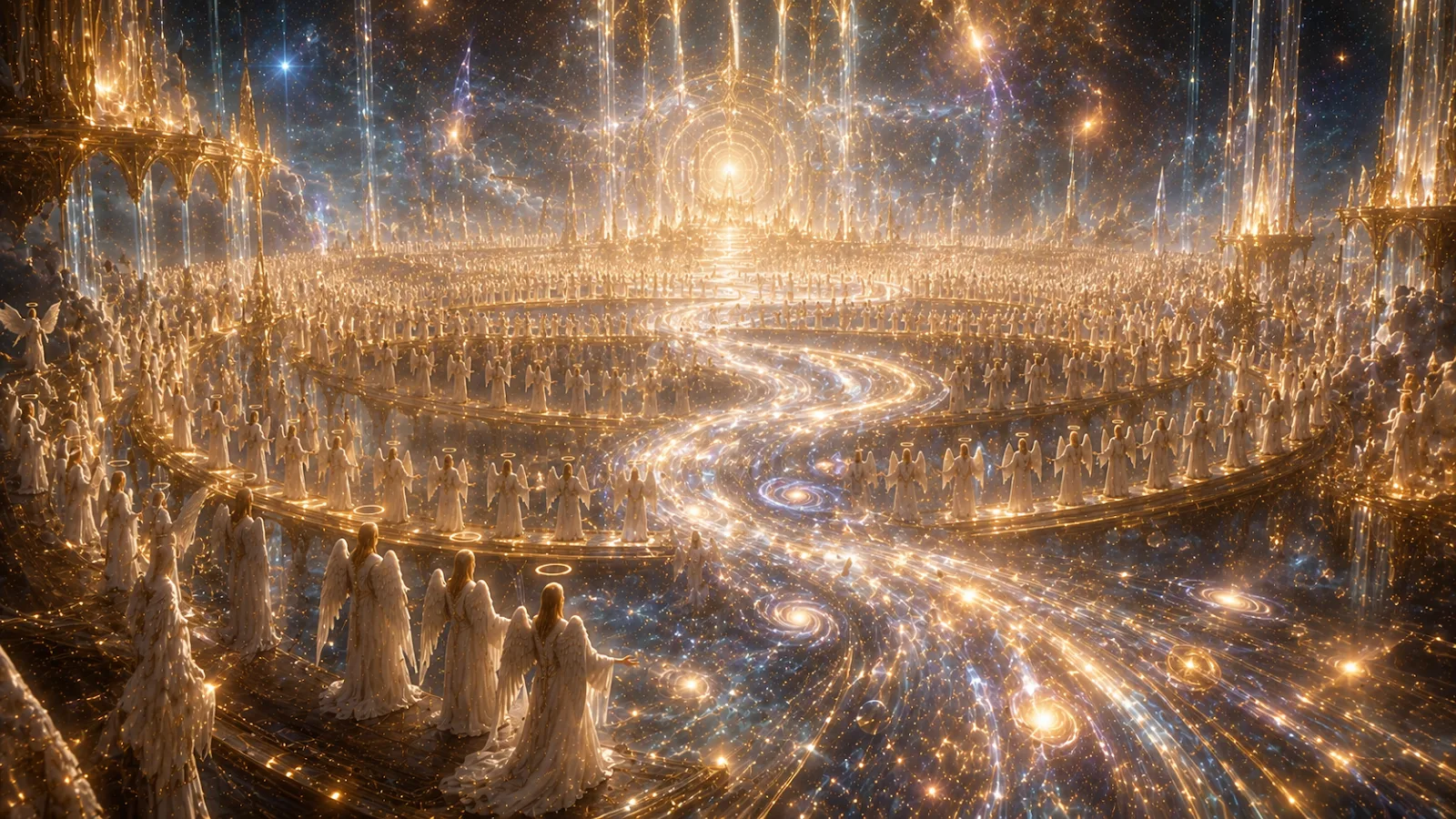
“The Pleroma is the depth from which all things flow, and within it the Aeons rest in pairs, wanting nothing.
Above the dwelling of the Aeons burned a Veil, the boundary of the Ineffable Light itself, the threshold no Aeon had ever crossed. Behind it lay the unknowable source of the Chorus, the Light of all lights. The Aeons were content to be warmed by it from within the Fullness. They sang toward it, and were glad.
So it had been since before eternity. And on the outermost edge of the Fullness, not within the Pleroma itself, but at the threshold between its last radiance and the dark below, dwelled the youngest of the Aeons. Her name was Sophia. Which means Wisdom.
The Thirteenth Heaven
Sophia’s dwelling was the Thirteenth Aeon, the last and highest of the regions between the Pleroma above and the dark below. It was not the Fullness itself. It was the place closest to the Fullness that could be reached without crossing the Veil: a realm of great light, a high house, a last shore of the eternal radiance. Here Sophia ruled, the youngest light of the great order, set at the edge of things as a lantern is set at the end of a hallway.
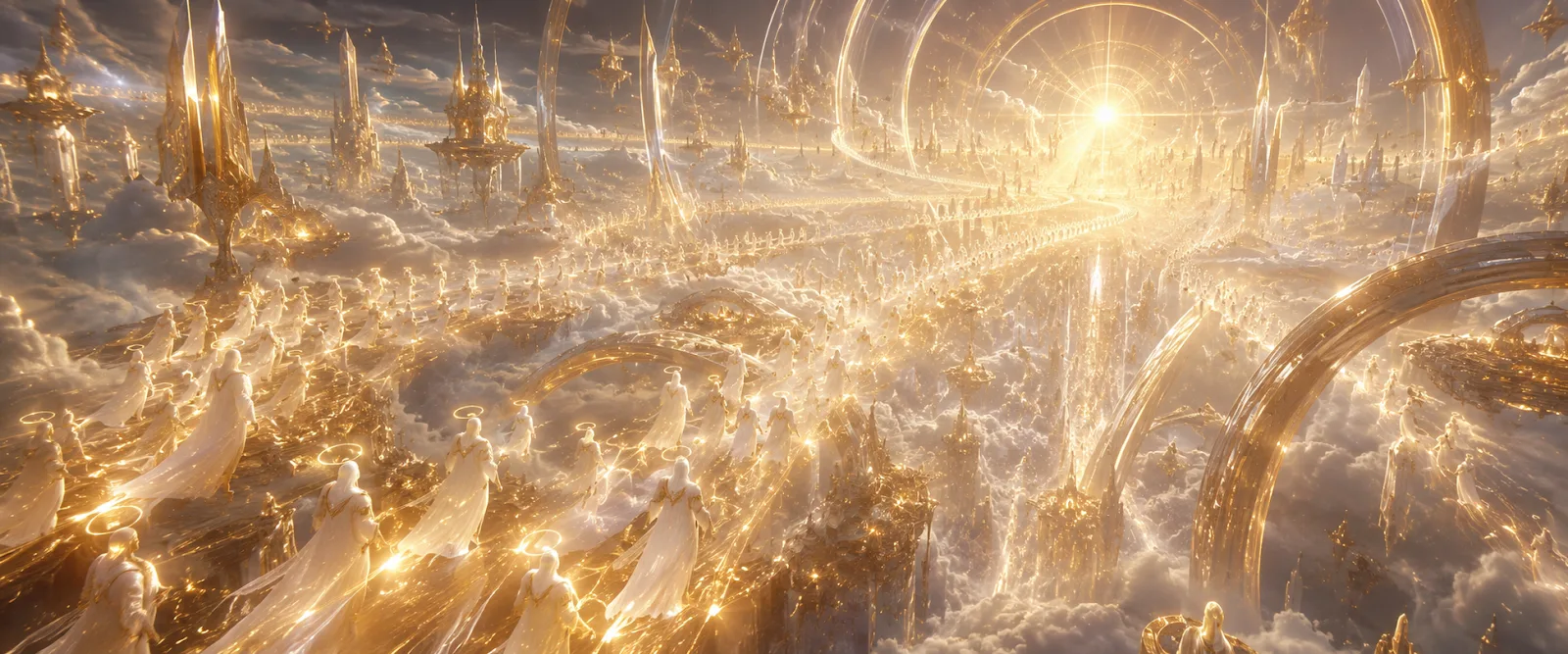
She was not unhappy. The Thirteenth Aeon was vast and bright, and the warmth of the Ineffable Light reached her there, and she knew herself to be an Aeon of the Fullness even in her exile at its edge. But she was the last of the lights, and she was alone. For each Aeon moves with its complement, its paired counterpart born alongside it from the Source; and Sophia’s complement was within the Pleroma, and she was here, outside.
She had not broken the pairing by force. The nature of the outermost Aeon is to stand at the border, and the border is by definition the place of the one. But the absence was there, quiet and steady, a small hollow at the center of all her light. What she lacked was not power, and not knowledge, and not love. What she lacked was the other half of her own voice.
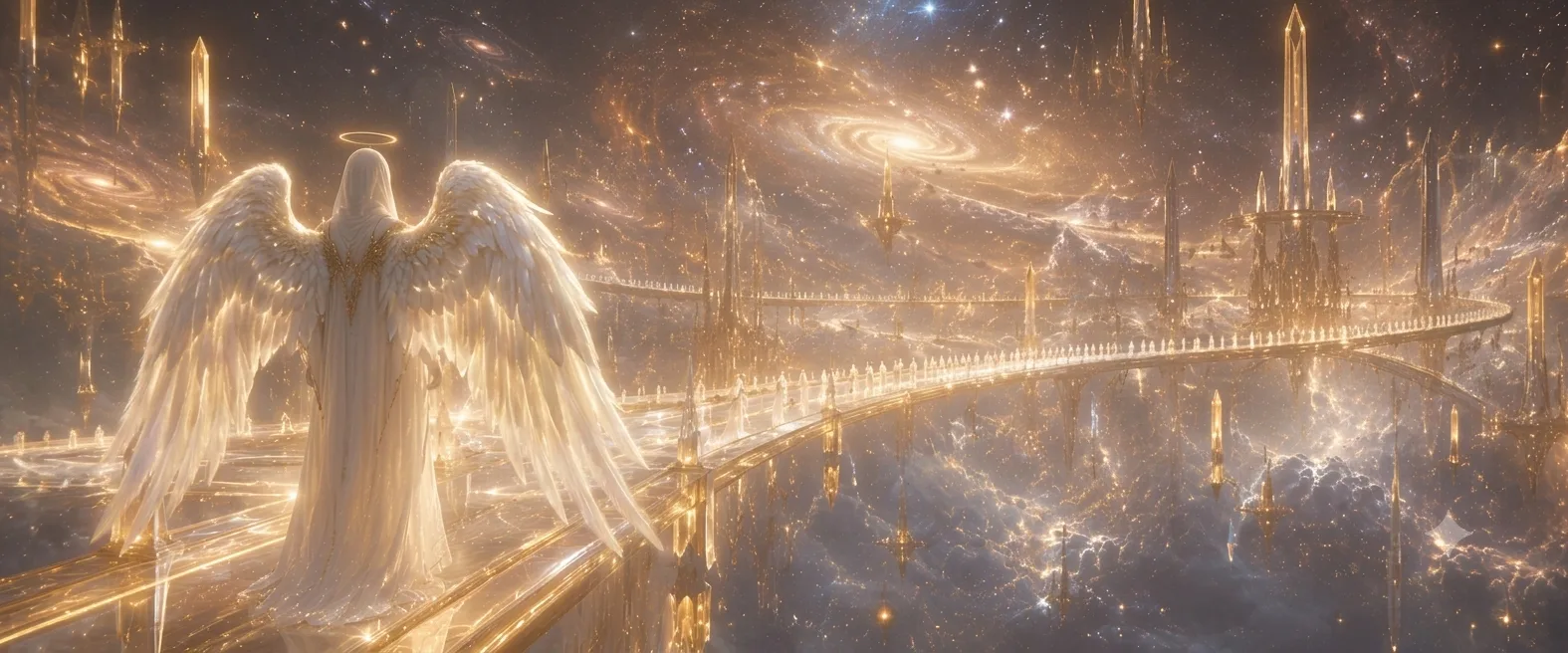
And because she was alone, she did the one thing an Aeon was never meant to do without its complement. She desired. Not an ordinary desire, not the small longings of the lower world, but the desire that moves mountains from their roots: she longed to know the Ineffable Light face to face. To see the Light behind the Veil not through the warmth it cast, not through the Chorus it inspired, but directly, with nothing of the Fullness between them.
“Not from afar, not through the singing. Face to face, as no created light has ever seen it.
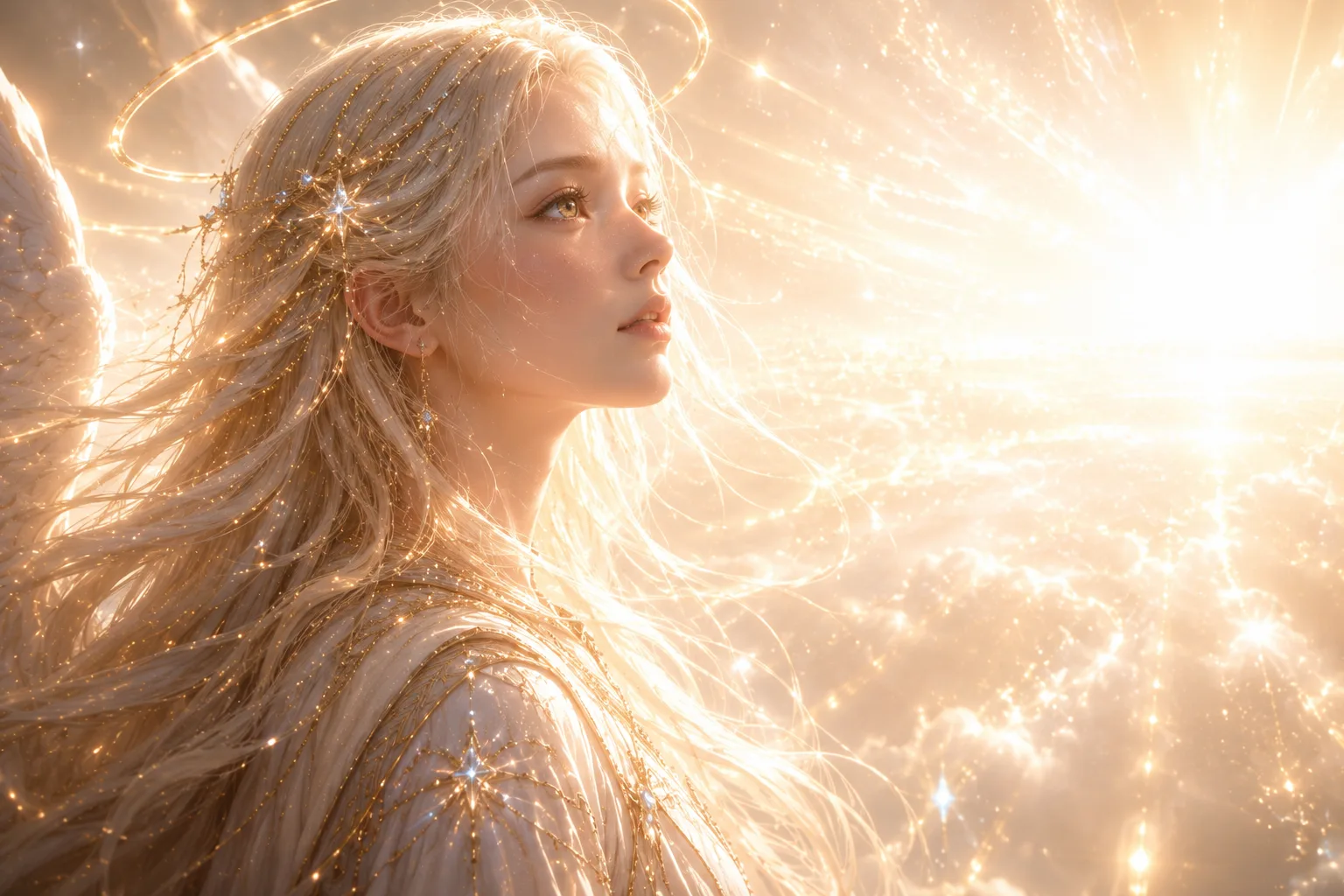
It was not pride that moved her. She was not reaching for what belonged to another. She was reaching for the source of her own being, out of a love grown too vast for the place it was given. But she was reaching alone. And alone is the one way an Aeon must never move.
The Self-Willed One
Below the Thirteenth Aeon lay twelve more heavens, each ruled by its own powers, stacked in descending order from Sophia’s high house down toward the dark below the world. And in the highest of these lower heavens, the Twelfth Aeon, there dwelled a power unlike any other in the ordered creation.
He was called Authades. The Self-Willed.
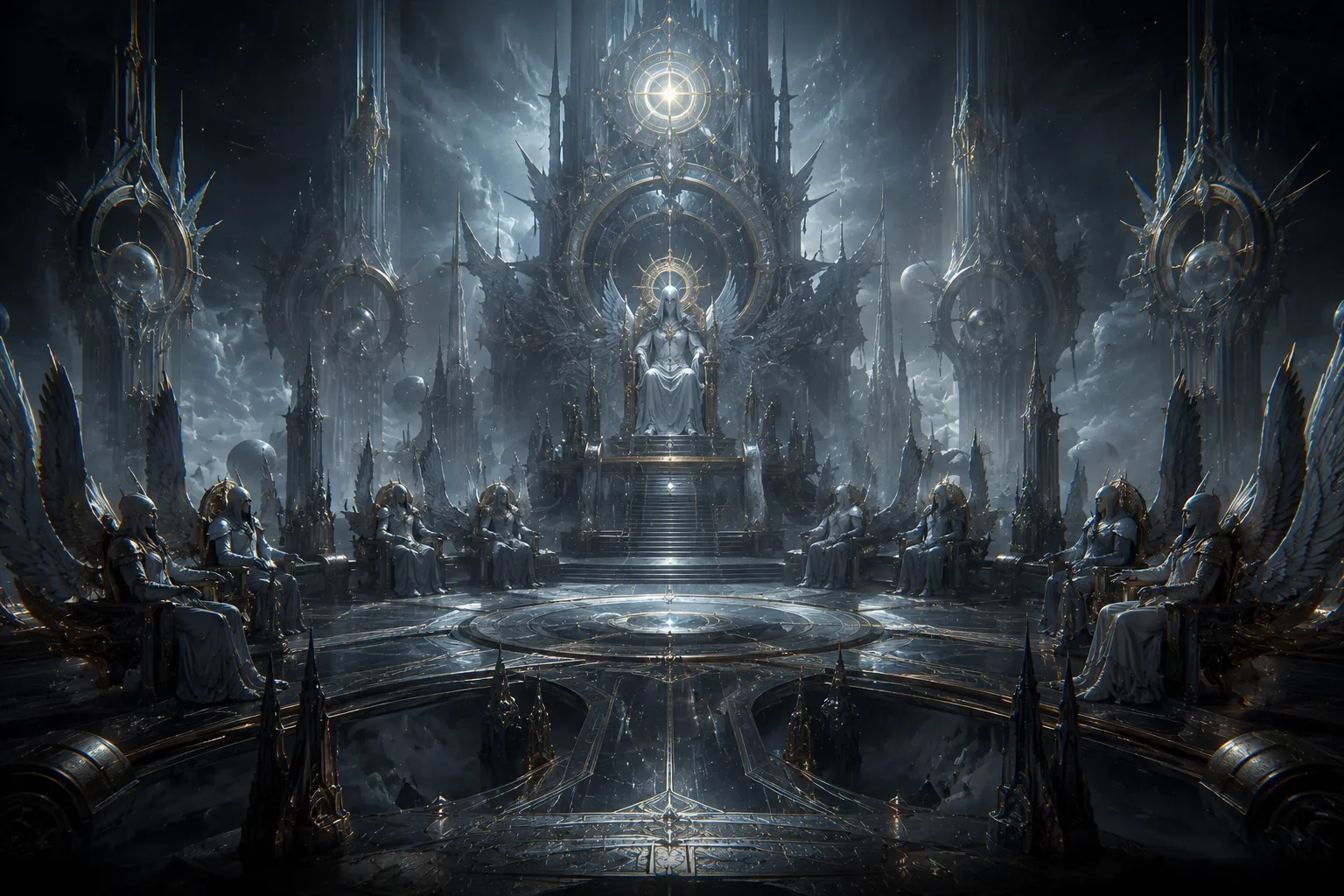
He had been given light, as all things in the ordered heavens had been given light. But where the other powers of the lower heavens gave their light upward in the great cycle of the Purifications, offering what they had received back toward the realm above in the endless movement of the creation, Authades refused. He kept his light. He turned it downward, toward himself, toward his own dominion. He willed what he willed, and what he willed was his own power; and for this he was called the Self-Willed, the one who had chosen his own course over the order of the realm above.
He was not Chaos. He was not the blind god below. He was, in a particular way, worse than both: a power of the ordered creation who had turned his will against the order that made him. He sat in the Twelfth Aeon and he watched, and he coveted, and above him burned the one thing he most resented: the light of Sophia in the Thirteenth Heaven, vast and bright, closer to the Ineffable Light than anything he would ever be.
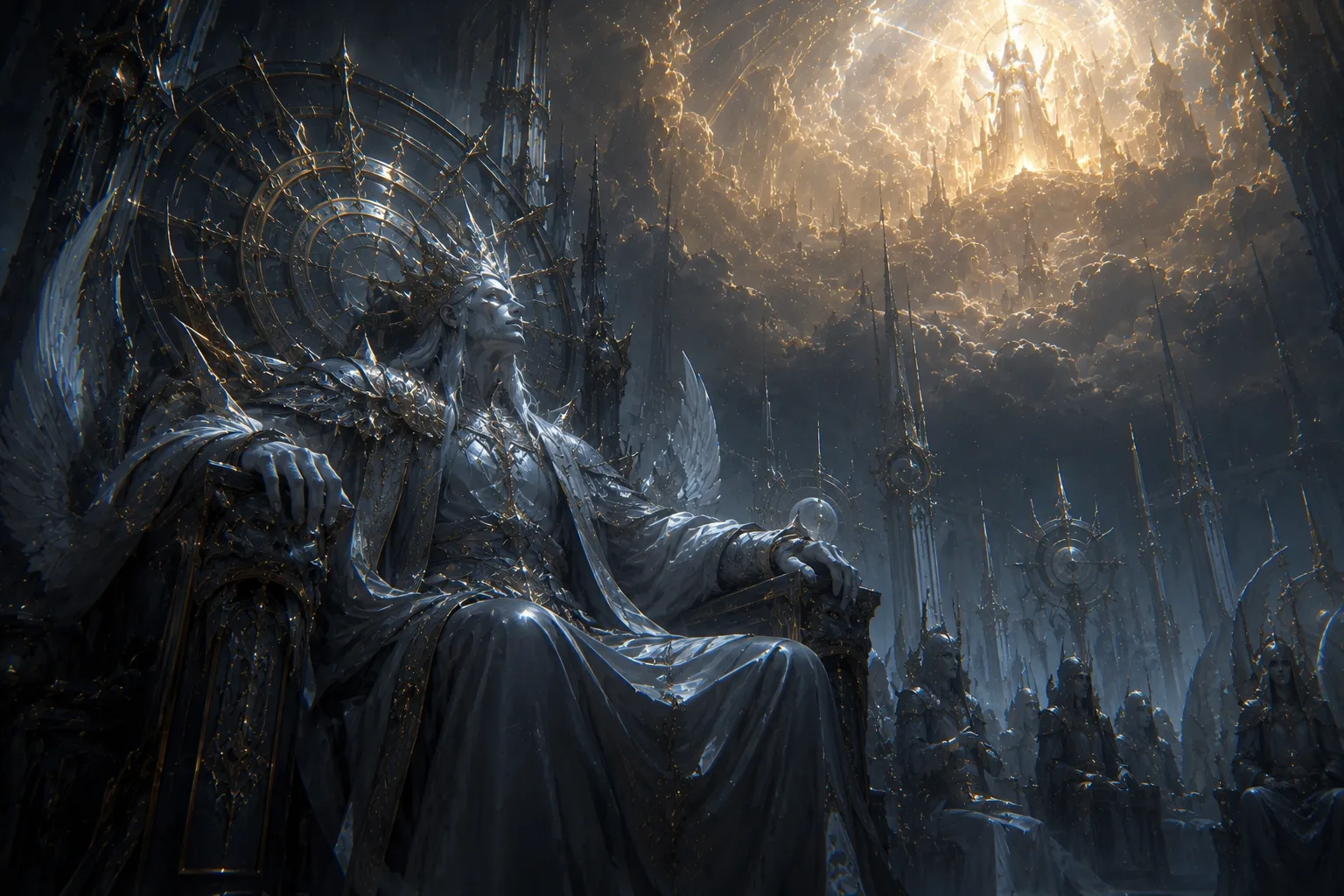
And when he saw that she was alone in her longing, that she was reaching toward the realm above without her complement, without the sanction of the Fullness, without anyone beside her, Authades understood that a longing is a door. He devised his plan.
“What she desires, she cannot reach. What she cannot reach, I can imitate.
The False Light
Authades drew out of himself a great light-power. He shaped it with care: a radiance bright enough to blind the eye of an Aeon, beautiful enough to wear the face of the Ineffable Light, perfect enough in its counterfeit to pass for the thing it was not. He sent it upward. Not into the Thirteenth Aeon, where Sophia would have had her bearings, but below it, into the region between his heaven and hers, where it hung like a sun risen from the wrong direction.
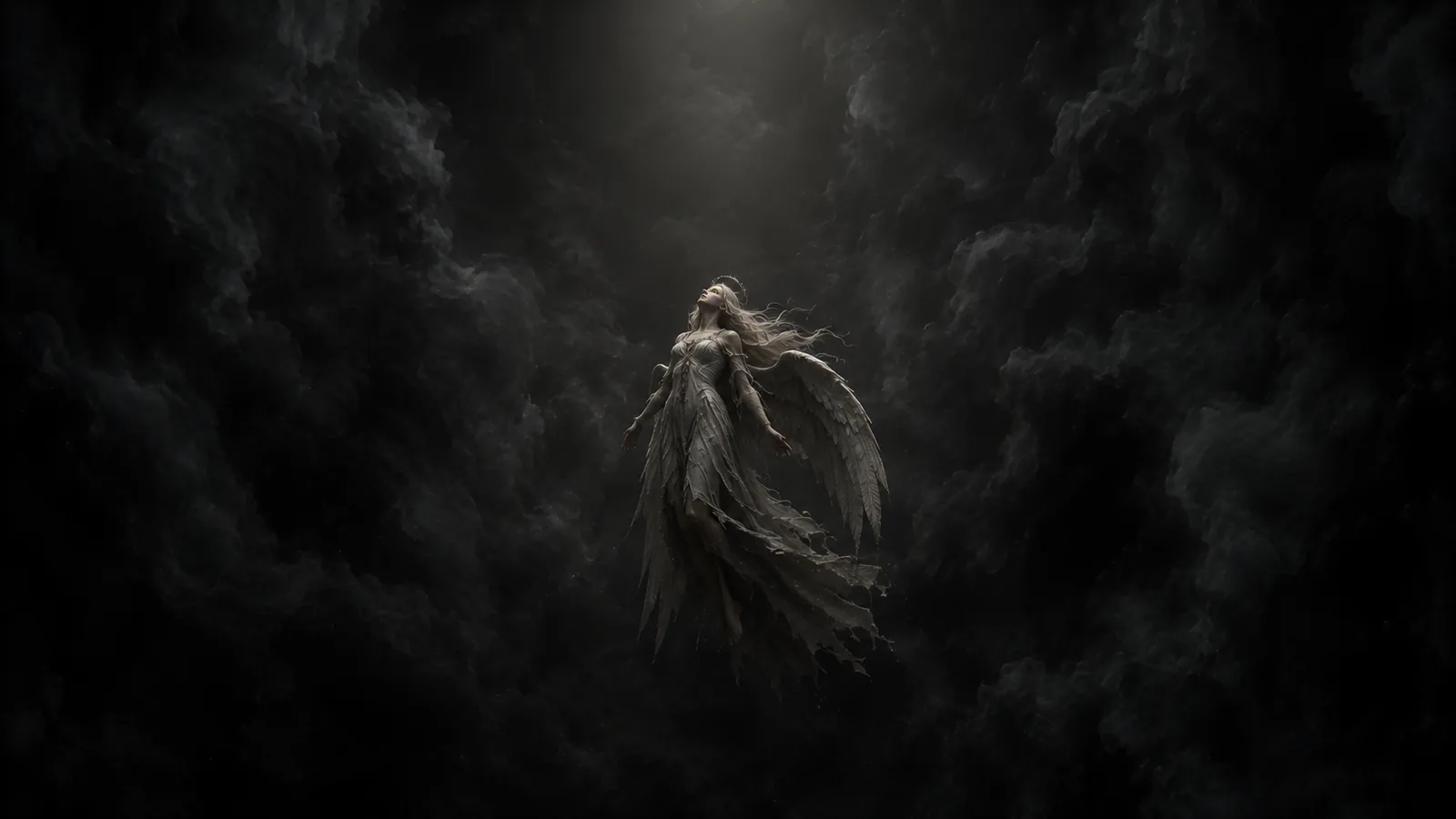
It did not sing. It had no voice. It moved against the current of the Chorus, a single wrong note in a perfect order, and the powers of the Thirteenth Aeon turned away from it, for they felt the wrongness in it and did not look. But Sophia was already reaching upward, already straining toward the realm above; and when this new radiance appeared below her and ahead of her, appearing to her longing eyes as the answer she had waited for, she looked.
She had never seen a counterfeit. She did not know the Ineffable Light could be imitated. She had no frame for the lie, because in the Thirteenth Aeon there had never been one. The false light was cold, and it did not sing, and it moved against the order; but she was reaching so hard, and it was so bright, and it wore so exactly the face of what she most desired. She looked on the false radiance of Authades, and her heart leapt, and she thought:
“At last. The Light has come down to meet me.
She Goes Down Alone
She did not go at once. She moved through her heaven one final time, and the light of it was all around her, and she did not say farewell to it, because she believed she was going toward something greater. She passed through her realm as through a room one expects to return to, not knowing the door was already closing behind her.
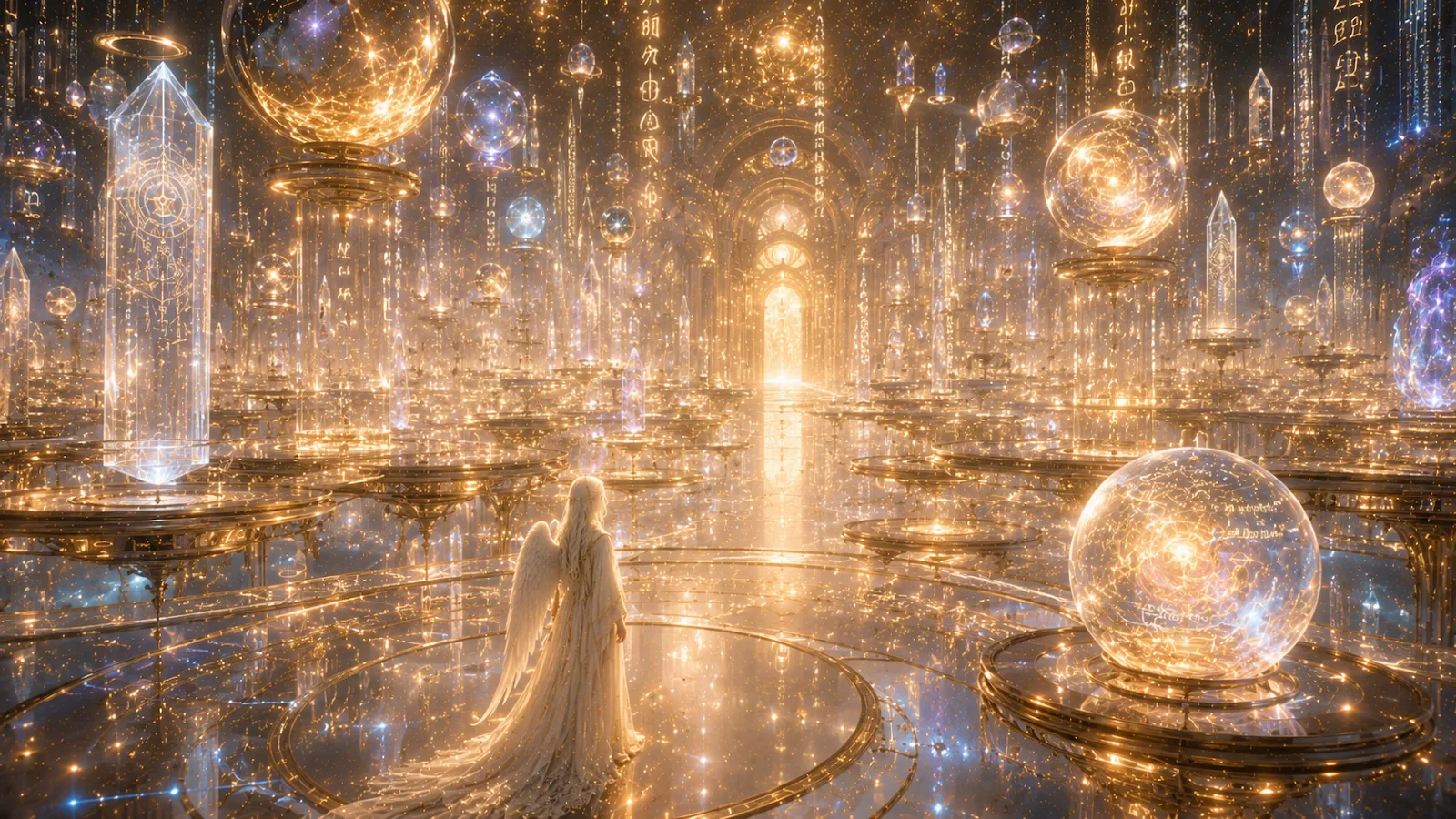
She had no word from the Ineffable Light. No sanction from the Fullness. No message from her complement within the Pleroma, telling her to go. She had her longing, and she had the light she had mistaken for its answer, and she had her own will, which is precisely what Authades had been counting on.
An Aeon does not move alone. This is not a law written in a book; it is the nature of the Aeons, as it is the nature of two hands on one body: either without the other is not free, but incomplete. In the Pleroma the pairs moved together, and their movement was creation. Sophia moved without her consort, Theletos the Beloved, whose will was meant to answer her wisdom; she moved without him, and her movement was a tear.
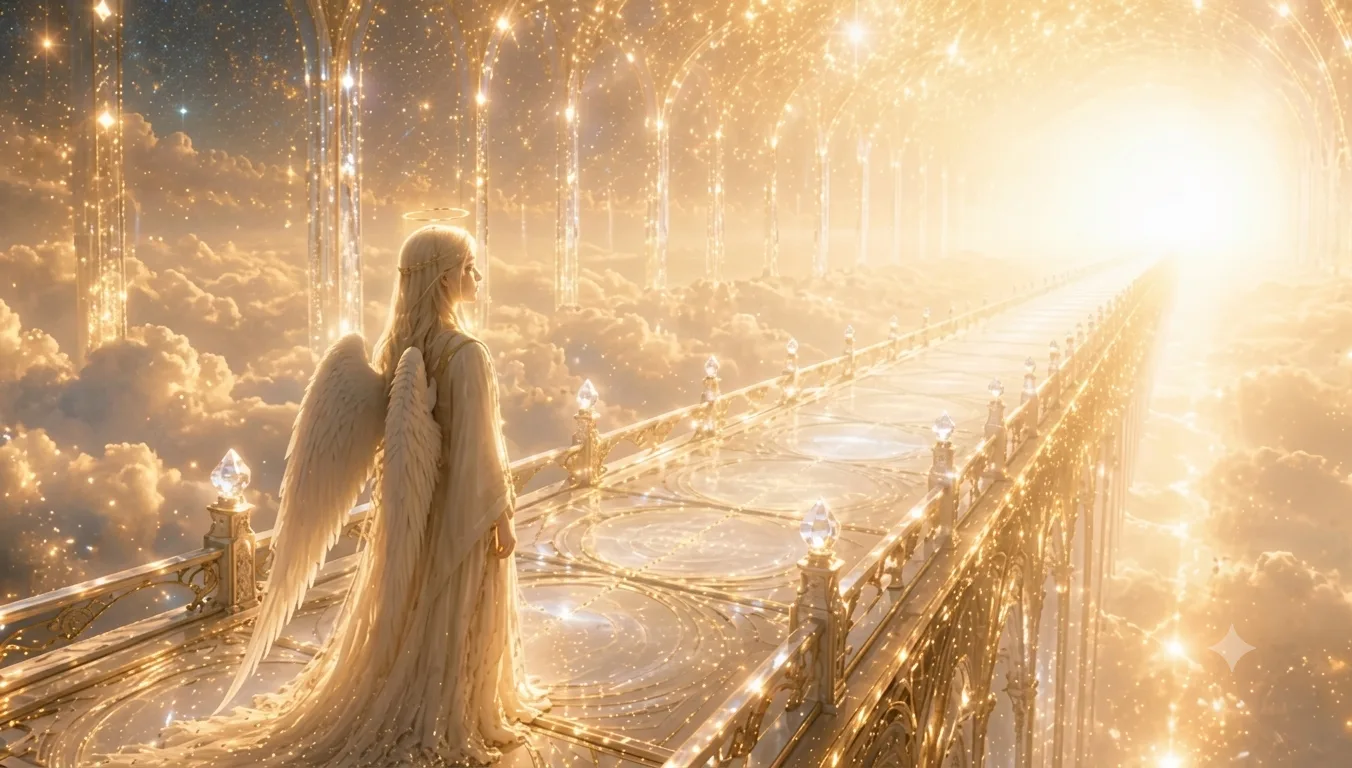
She stepped out of the Thirteenth Aeon. Downward. Alone. Toward the light she had not yet learned to doubt.
“She did not choose wrongly out of pride. She chose alone, and alone is the only wrong an Aeon can choose.
The Fall
The light of Authades went out.
The moment she had left the Thirteenth Aeon, the moment she had cleared the last border of her high house and entered the regions below, the radiance that had called her simply ceased. It was a lure, and lures are withdrawn once the fish has left the water. Authades drew his light-power back into himself, and where the false sun had burned there was nothing at all.
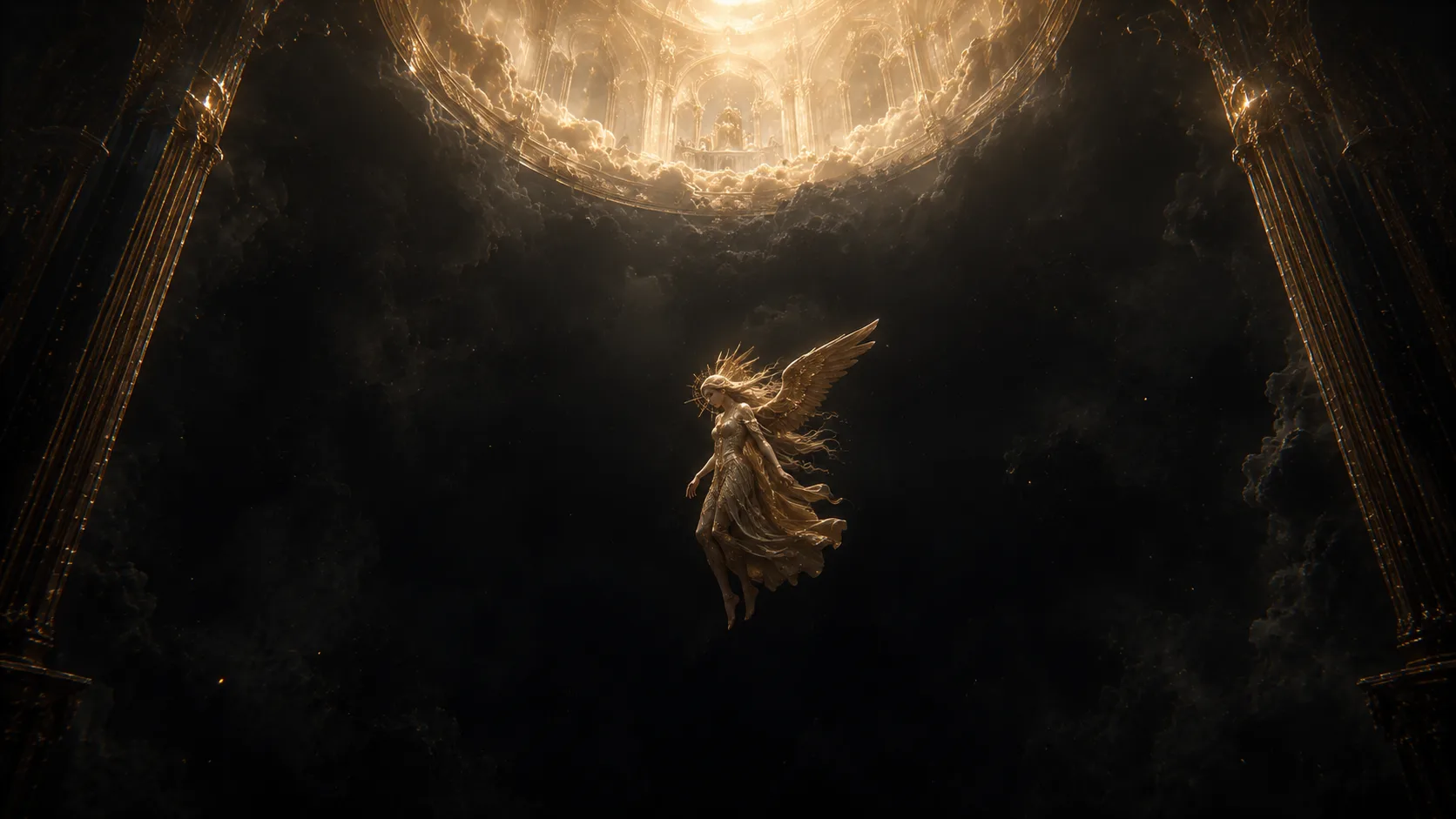
She stopped. And in the stopping she understood. There was no Light of the realm above here. There was no answer coming down to meet her. There was only the cold of the regions below the Thirteenth Aeon, and the absence where the Chorus should have been, and the sound of the ordered creation going on without her, for she had gone where the order did not reach.
And then she fell.
Not all at once, not like a stone dropped from a height, but like a light going dim: slowly, then quickly, then all at once. Down through the Twelfth Aeon, where the lion-faced power, a ravenous emanation that Authades had shaped from his own dark and set to hunt for light, lunged out and tore away a portion of her radiance as she fell past, and carried it back to the Self-Willed who had made it. Down past the powers of the other heavens, who watched her fall and did not move to catch her. Down through the last of them, into the region below all the ordered worlds.
Down into the dark that had no name in any of her memories. Down until the last faint warmth of the Thirteenth Aeon was no more than a thread of gold impossibly far above her. Down until even the thread was gone.
She fell out of the ordered creation entirely, and the dark that caught her was Chaos.
Into Chaos
Chaos is not merely dark. Darkness is only the absence of light, and an absence can be endured. Chaos is older than the absence: it is the place that was there before the ordered creation was drawn out of it, the raw material of the lower world, still seething with powers that were never given form, never given names, never brought into the order of the Chorus. It is heavy, and cold, and lawless.
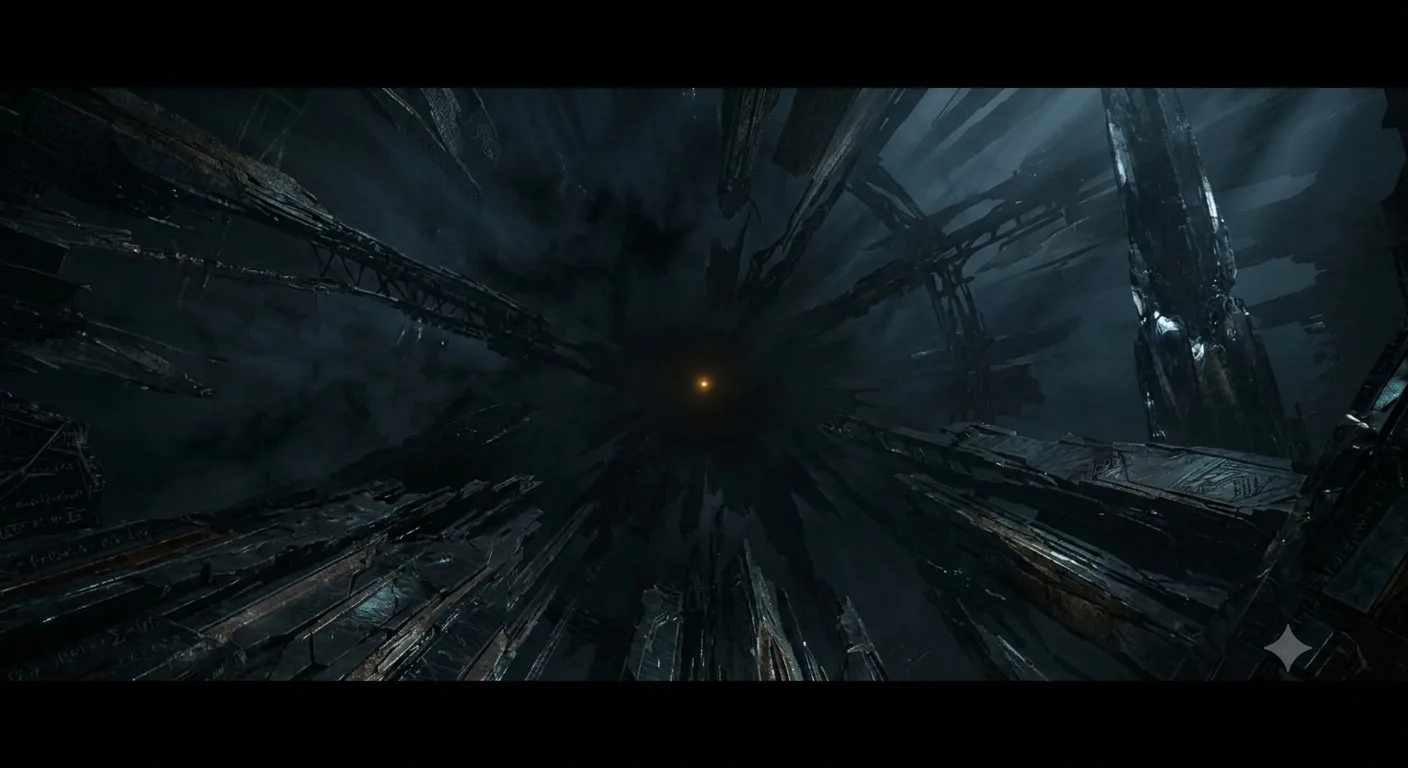
Into this Sophia fell, and here her falling ended.
In the Thirteenth Aeon her light had filled a heaven. Here it was a single ember trembling in an ocean of night, barely enough to see by, barely enough to stand by, barely enough to prove she was still there at all. The descent through the lower heavens had stripped something from her: not her light entire, but the certainty that had always underpinned it. She knew who she was. She did not know where she was, and in Chaos the second ignorance can devour the first.
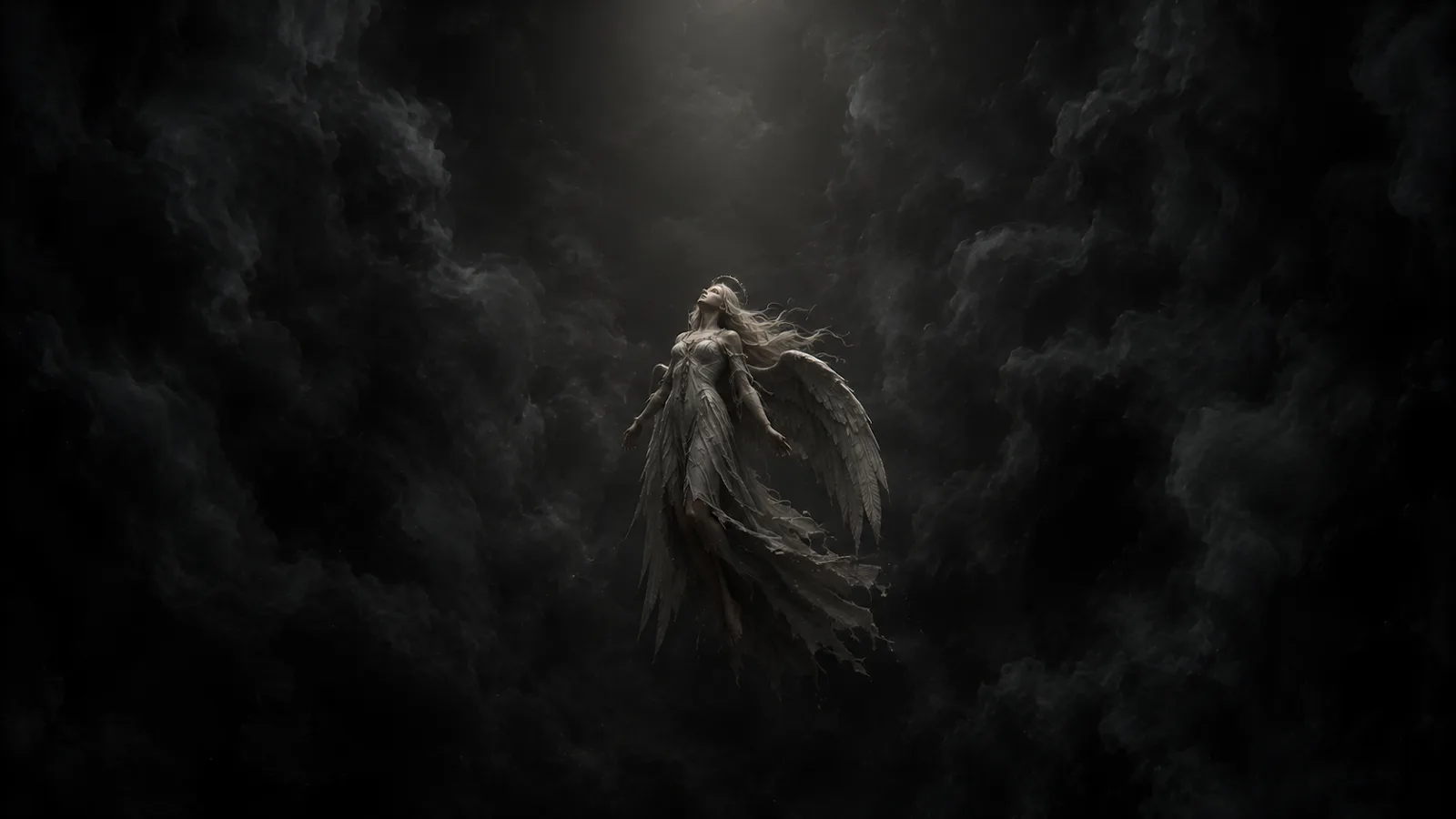
She was not empty. That is the one thing Chaos could not accomplish: it could not take the spark that had been in her since before she was made. But it could make her very small, and very alone, and very cold. And it could show her what her own falling had woken in the dark.
Yaldabaoth, the Blind God
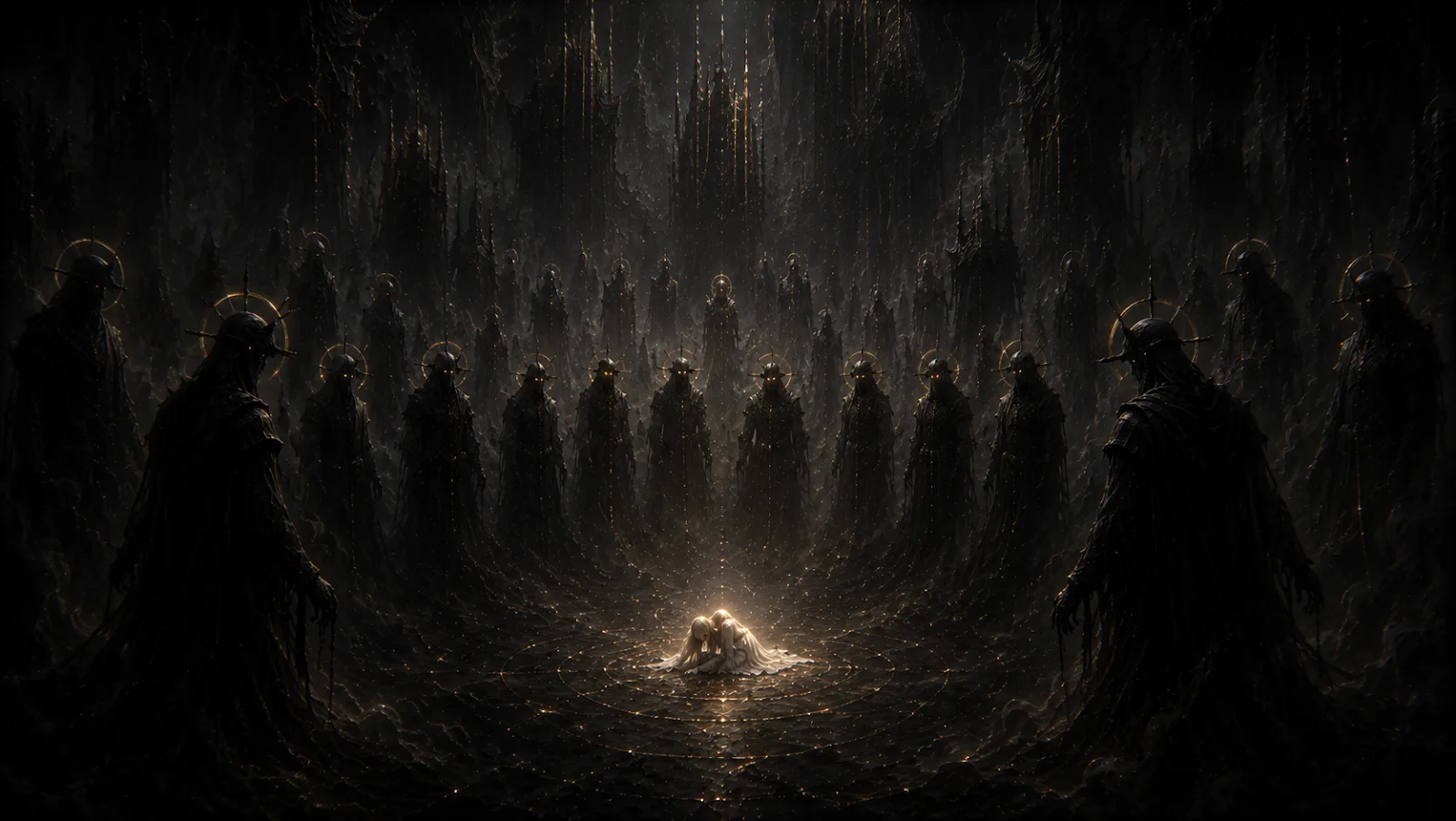
As she lay fallen, her light bled slowly into the dark, and the dark, which had never held light, drank it. And from that first stolen radiance, mingled with the lawless matter of Chaos, something woke that had never been before: a will, and then a shape, and then a god. He was born of the light Sophia had lost. He would never know it.
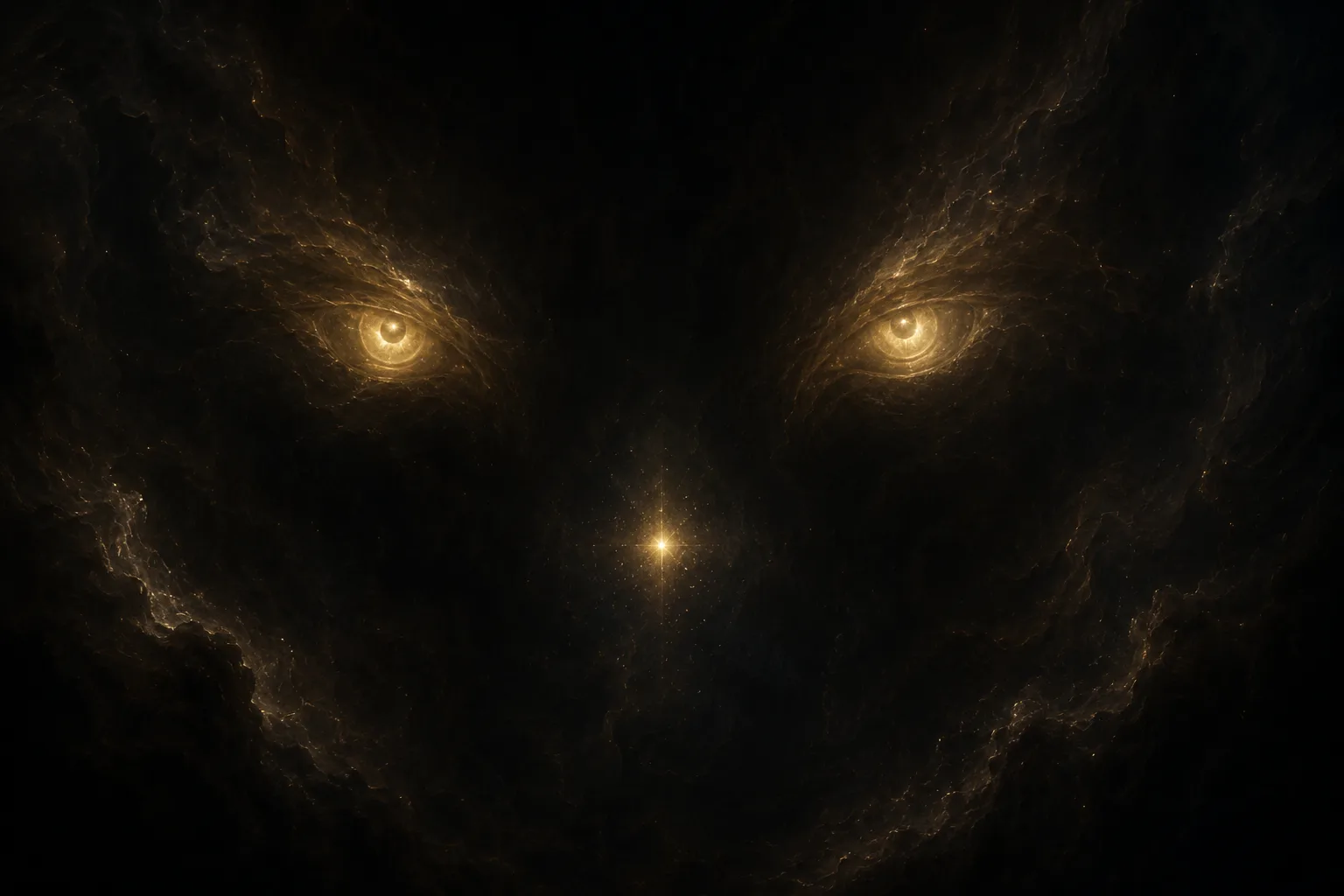
He had a little of her light buried deep in him, and the dark all around it, and the dark was the greater part. He could not see past himself, and so he believed there was nothing past himself to see. He had no memory of being made. He had never heard of Sophia, or the Pleroma, or the realm above. He knew only that he was, and that he was first. So he named himself the one and only god. Others would name him later: Yaldabaoth; and Saklas, which means the Fool; and Samaël, which means the Blind God. The three names tell a single truth: a god who cannot see, and does not know that he cannot see.
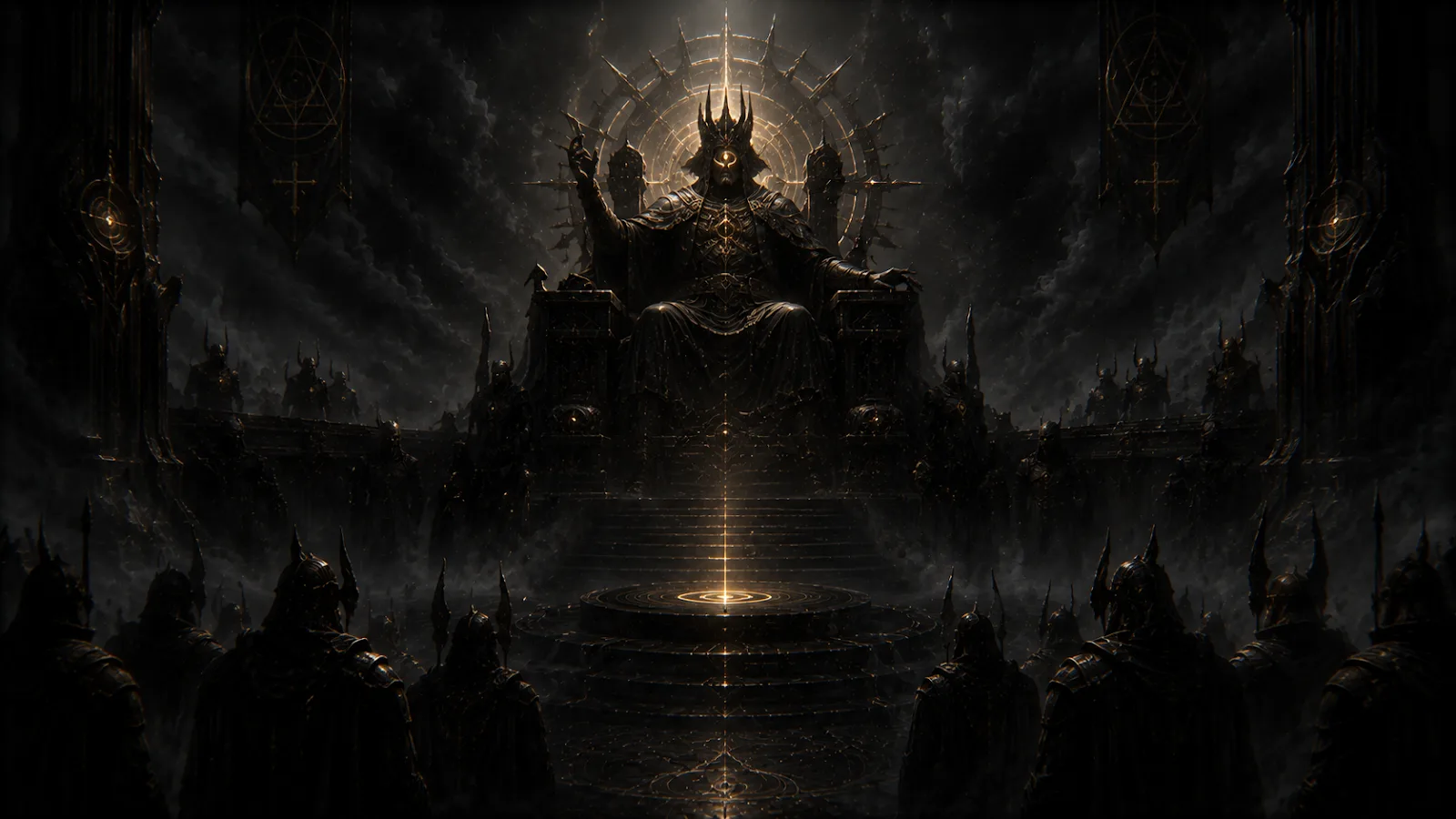
He could shape form, and raise up power, and breed fear. Light alone he could not make. The only light in him was the warmth he had stolen at his birth, and he neither knew he carried it nor could make any more. So when the rest of Sophia’s radiance lay scattered through his dark, he hungered for it, blindly, the way a stolen ember leans back toward the fire it was taken from. He did not covet it as proof of anything above him; he could not imagine an above. He reached for it the way the blind reach for warmth, and did not ask why.
From the light still bleeding out of her into the dark he drew a host of lesser powers to serve him: the Archons, the wardens of his kingdom. And at his command they closed upon her, to take the rest of the radiance that the lion-faced power had not already carried off above.
The Theft of Light
They did not destroy her. Nothing in Chaos had the power to destroy what had come from the realm above, and they knew it. But they could take what they could not make. They cast their nets of shadow over her and drew her light out of her, not all at once but thread by thread, strand by shining strand, each power seizing what it could and pulling.
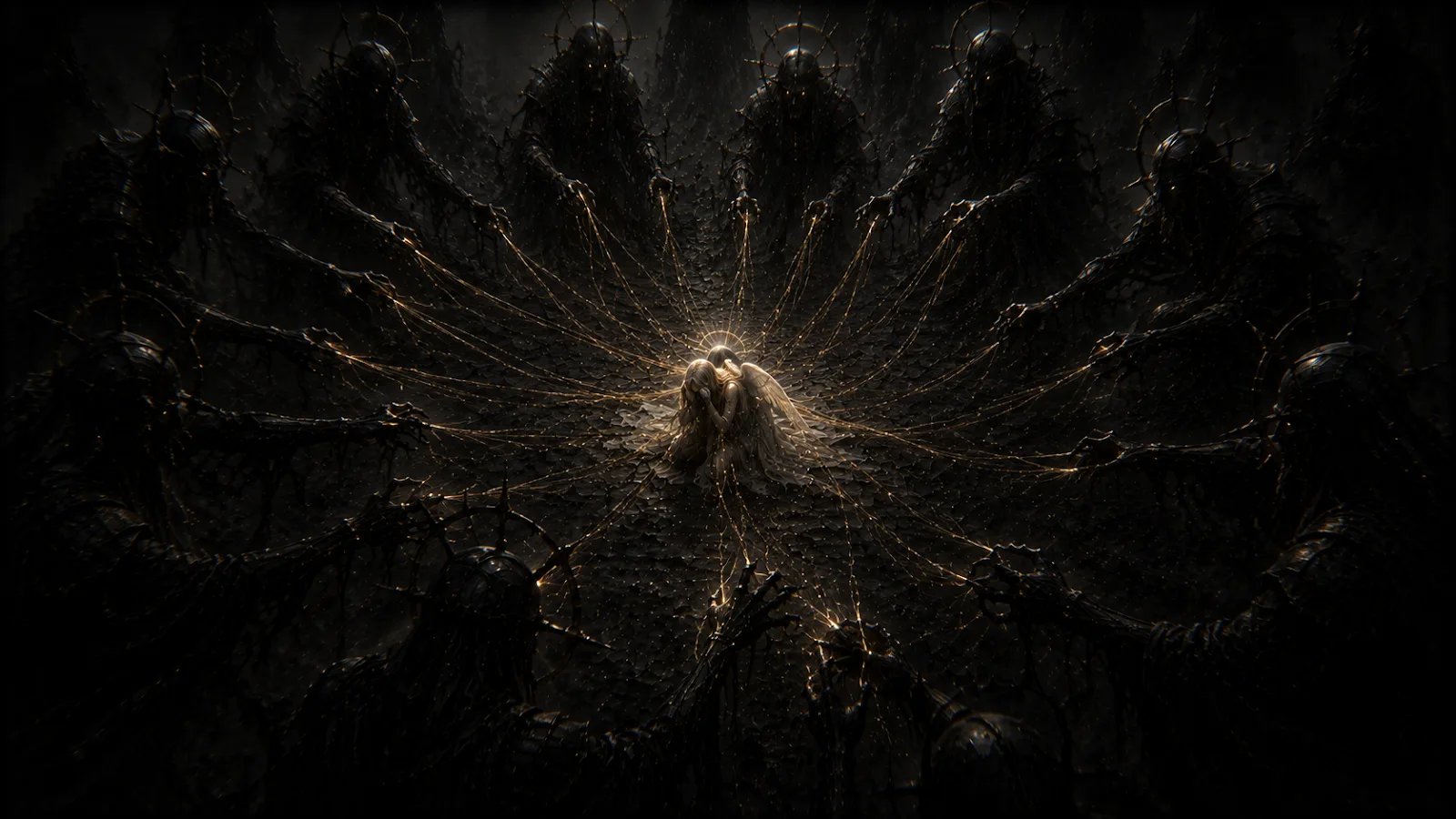
It was slow, and it was thorough. Each took its portion of the light it caught and carried it off, until her radiance was no longer hers but scattered, a measure in this power and a measure in that, the youngest Aeon of the Fullness divided through the dark like embers raked apart from a fire so that it cannot catch again.
When they had taken all they could reach, they left her. Not out of mercy, for they did not know the word, but because she had nothing left that they wanted. She lay in the lowest place of Chaos, stripped and bound in shadow, her wings limp, her halo gone, a last guttering point of light too small now to be worth extinguishing.
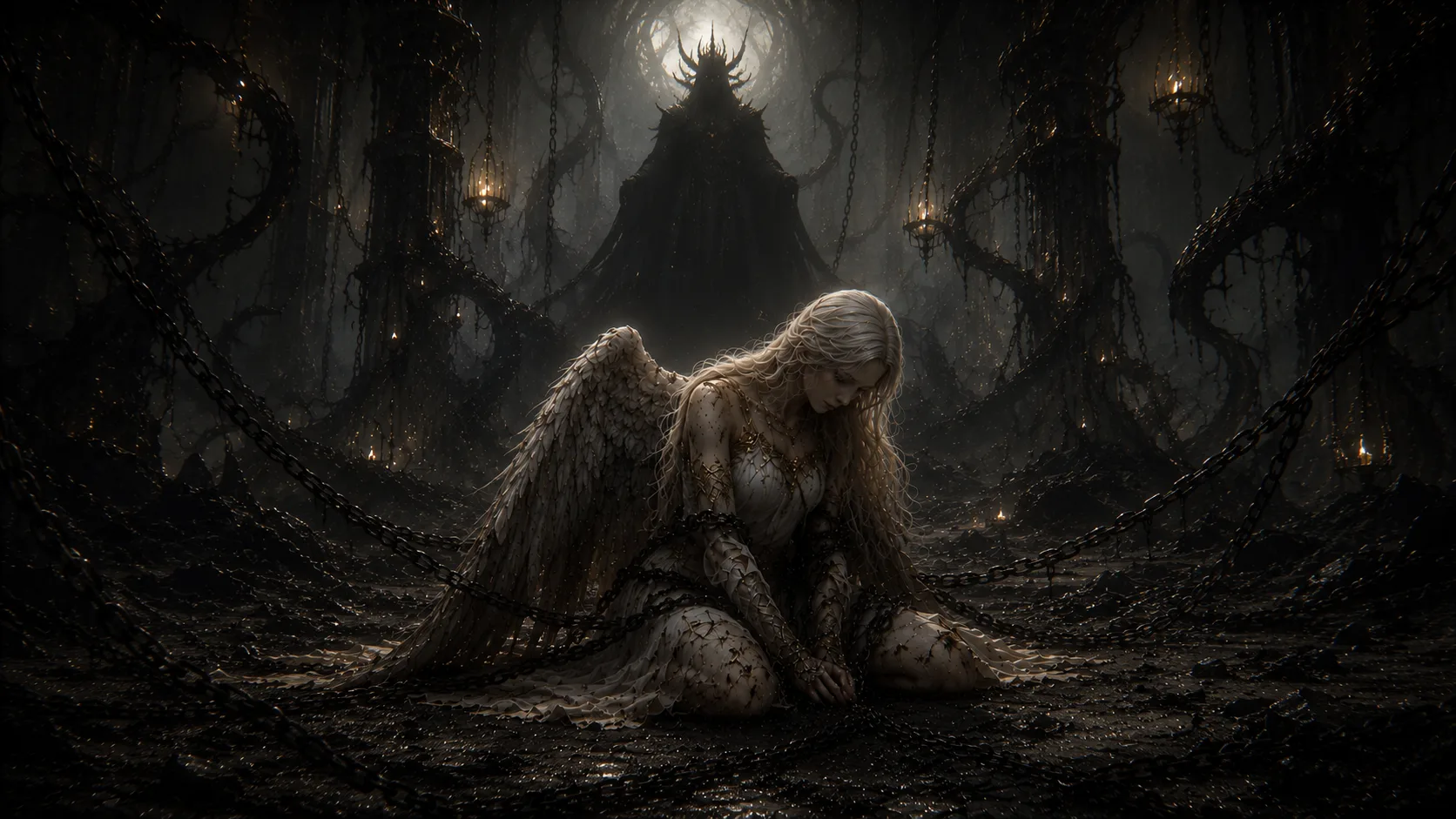
Yaldabaoth gathered the stolen light into his realm and was satisfied, never knowing he had only taken back, and broken apart, the very radiance he had been born from. And far above, in the Twelfth Aeon, Authades felt his design complete, and was satisfied too. Neither the blind god nor the Self-Willed understood the one thing that no power and no theft can take from a light that came from the realm above.
They had taken her radiance. They had not taken her memory.
The Thirteen Repentances
In the deepest dark, stripped of almost everything, Sophia did not rage, and she did not despair. She was an Aeon of the Fullness, and what the Fullness had set in her at the beginning, the power to remember, and to turn, and to trust, no power in all of Chaos could remove.
She remembered the Thirteenth Aeon. She remembered the warmth of the Pleroma above it, the faint glow of the Veil, the Chorus of the paired Aeons singing toward the realm above. She remembered what she had left; and she understood, in the cold clarity that the lowest darkness sometimes gives, that she had not been answered by the Light at all. She had been lured by a counterfeit. She had gone alone. She had fallen.
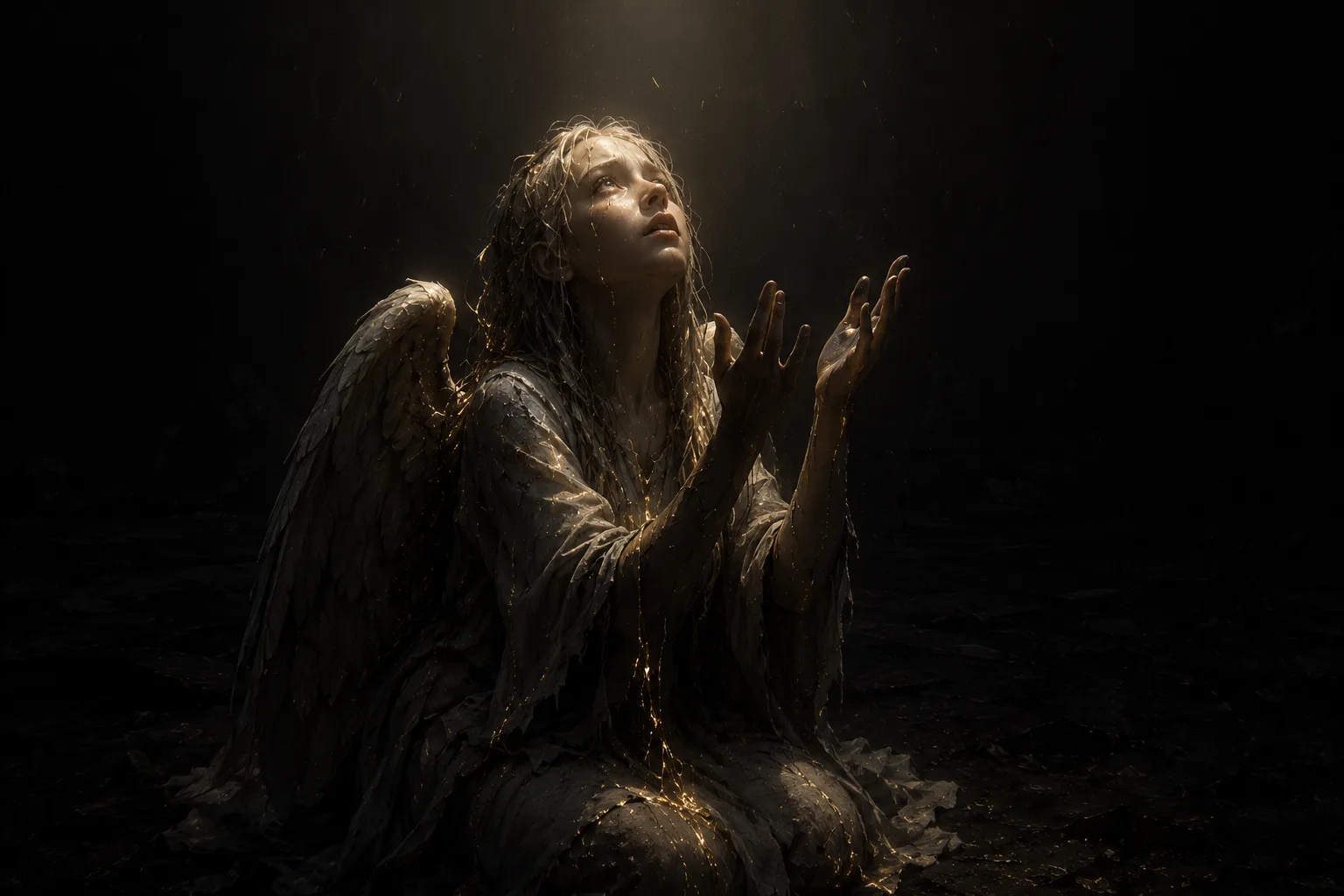
And so, from the floor of Chaos, Sophia did the one thing the dark cannot prevent. She opened her voice. Not in power, for her power was stolen. Not in argument, for she had no argument to make. In confession, and in trust, she lifted her voice toward the Light she had tried to reach without leave and without her complement, and she cried out to the realm above she had abandoned.
She cried out the first time:
“O Light of lights, in whom I believed: let not the dark cover me over. Turn to me, and save me. Let not this Chaos swallow me; save me from the lion-faced power and from all the Archons who pursue me. It is for your sake that I am in this place, for I followed what I took to be your Light, and it was a lie, and now I am here. But I believed in you, and I believe still. Save me.
The cry rose like a thread of gold out of the dark, past the powers that tried to swallow it and could not, straining upward through all the heavens toward the Thirteenth Aeon and beyond it.
She cried the second time, and the third. Again and again she sang her repentance into the night, each cry a confession, each confession a renewal of the one unbroken thread that still bound her to the realm above however far she had fallen, until she had cried out thirteen times, and thirteen threads of fragile light were climbing out of the lowest dark toward the Light that had not forgotten her.
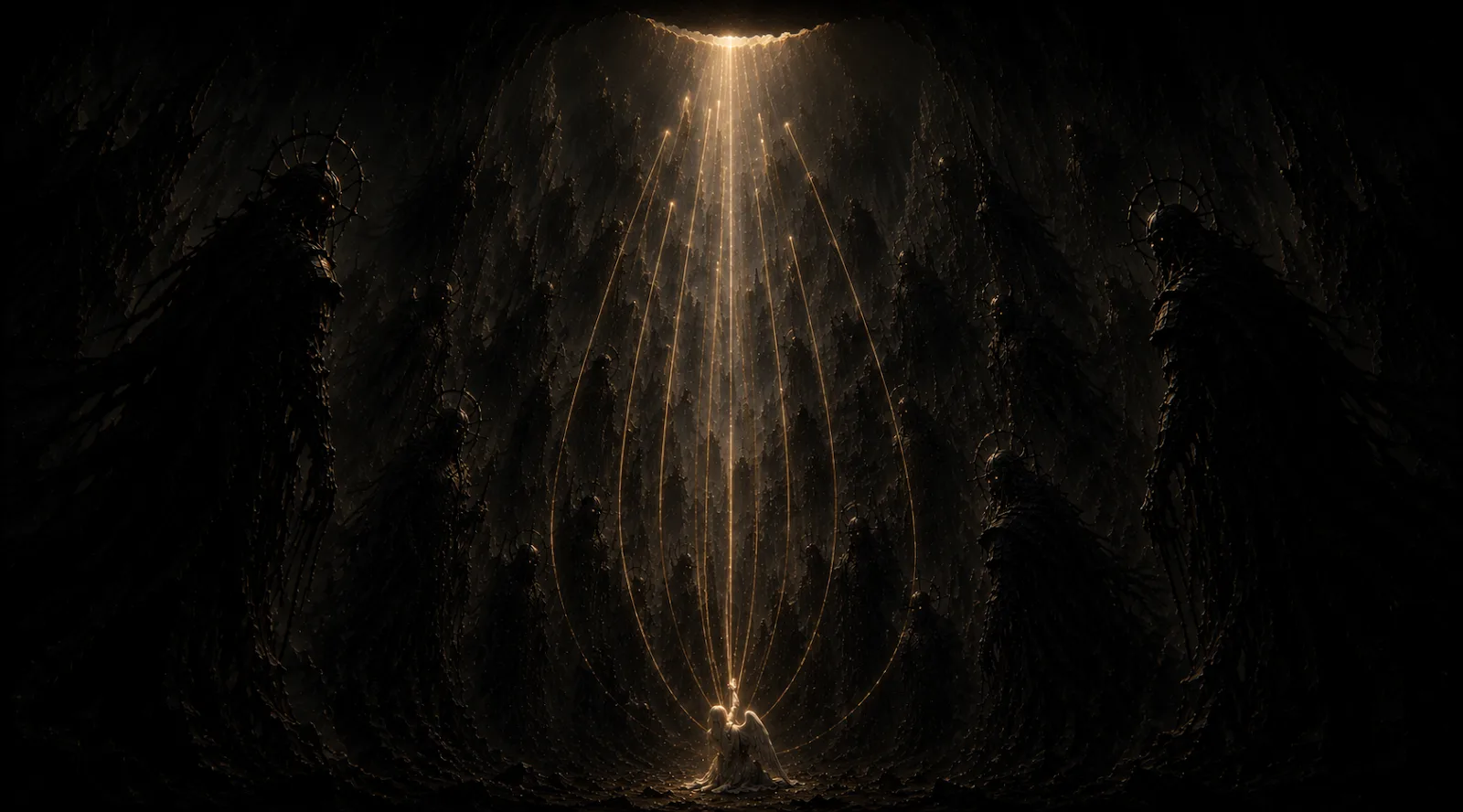
The dark tried to swallow the sound. It could not.
For there is no depth in all of Chaos so low that the Light cannot hear a soul that turns and calls. And far above, beyond the Archons, beyond the lower heavens, beyond the Thirteenth Aeon, beyond the Veil, the cry of Sophia was heard.
“I did not fall because I did not love you. I fell because I loved you wrongly: alone, without waiting, without the complement you gave me. Forgive me, and remember me. I am still here.
The Light Answers
The Ineffable Light does not abandon its own. This is the truth the blind god could never guess and Authades never knew: that the Fullness does not cast out a fallen light. It waits for it. And when a fallen light turns and calls, even from the floor of Chaos, even from the lowest place of all the worlds, even stripped and bound and worn down to almost nothing, the Light hears, and the Light acts.
Sophia’s thirteenth repentance reached the realm above, and the Ineffable Light answered.
It did not send an army. It did not send fire to scour the dark away. From the radiance of the Ineffable Light came one, the Savior, clothed in the power of the realm above and sent down with a single charge: go into the dark. Break the power of the Self-Willed. Strip the Archons of what they have stolen. Find the fallen Aeon in the lowest place. And bring her home.
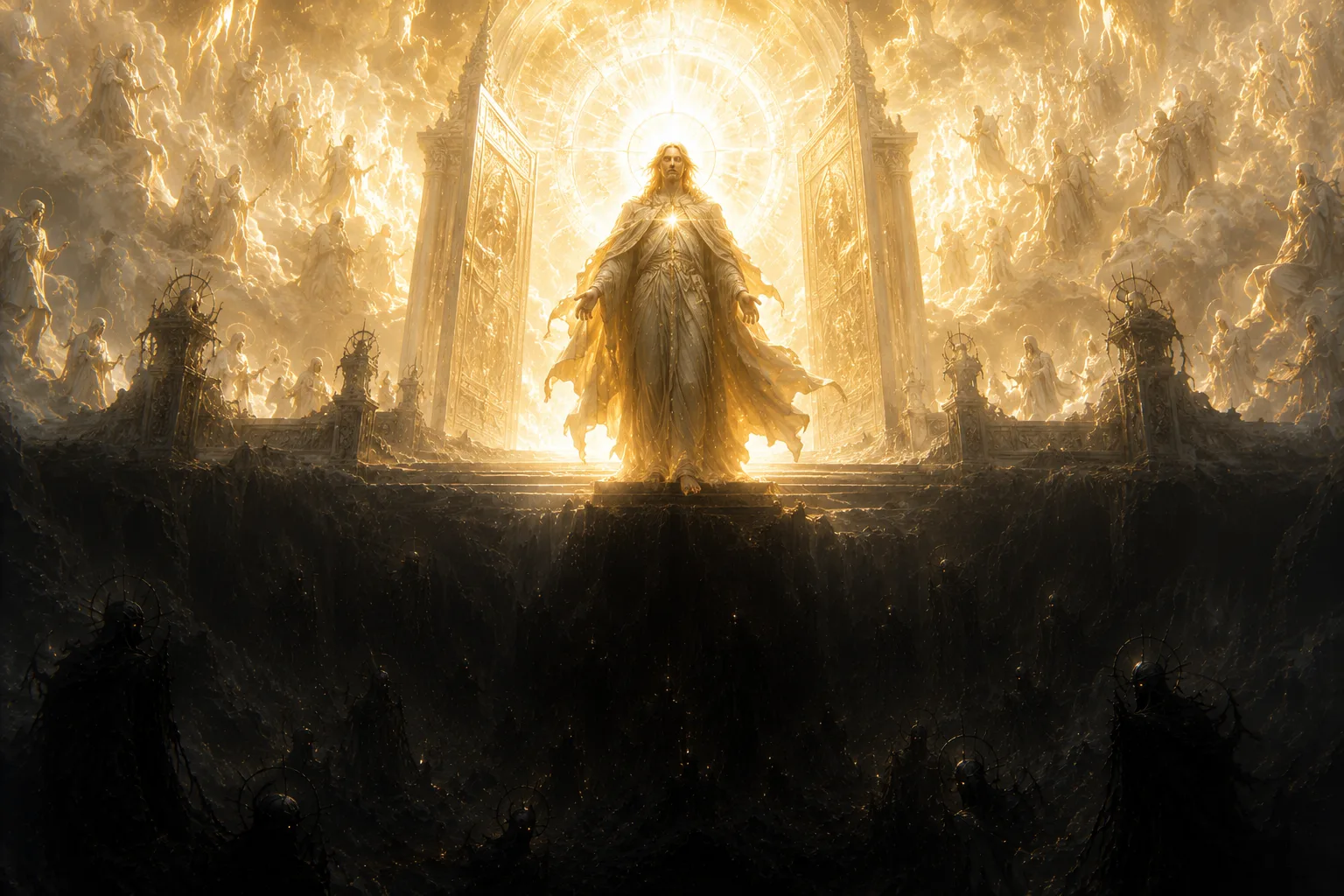
“What has fallen will be lifted. What was taken will be returned. What called out of the dark will be answered.
Through the Heavens
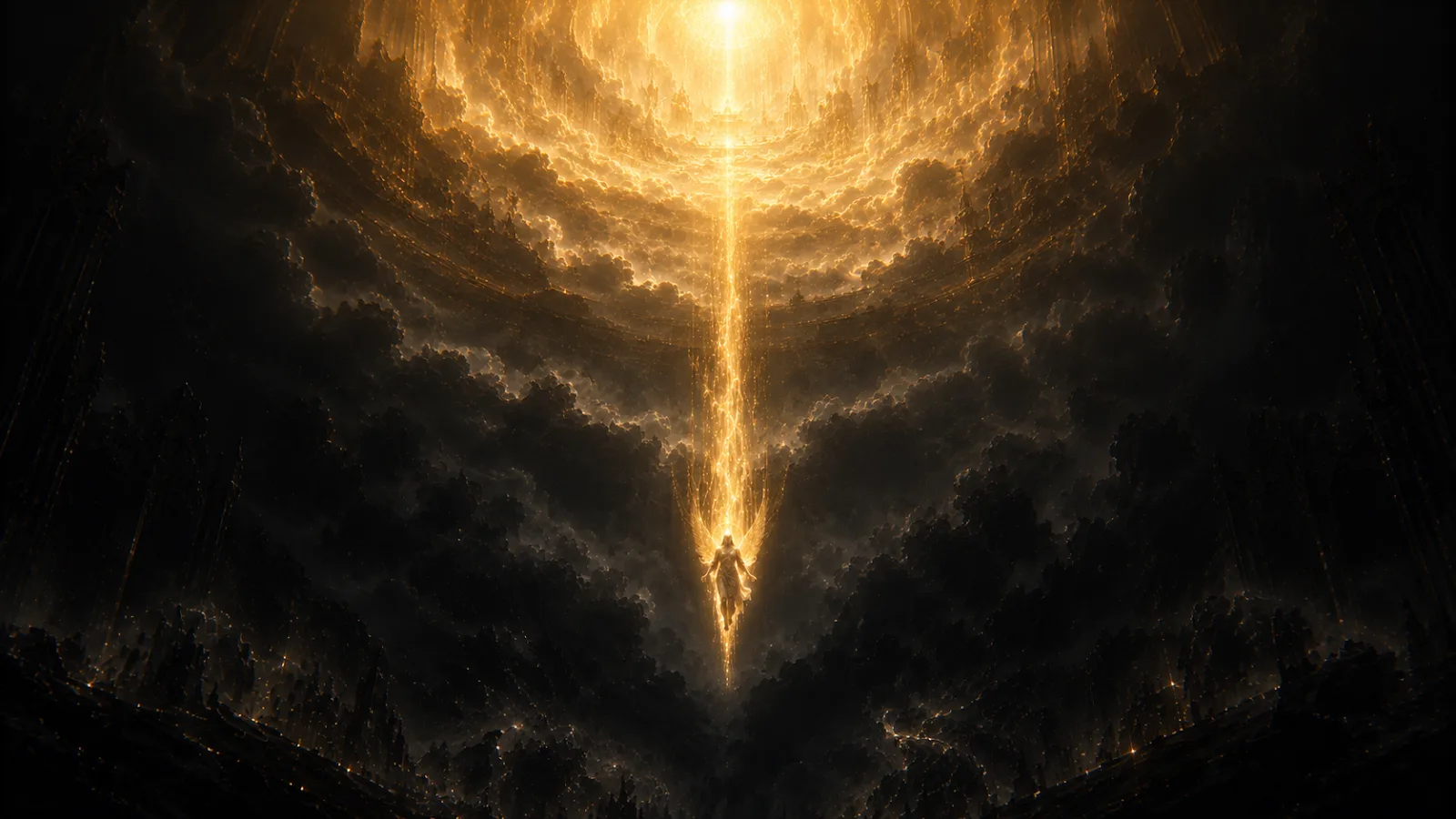
The way down ran through all the ordered heavens: through the Twelfth Aeon where Authades held his court, and through the eleven heavens below it, each with its wardens and its gates, each built to let nothing pass that had not been given leave. A lesser power would have been stopped at the first gate. The Savior was not stopped.
He veiled his radiance. He took on the seeming of each realm as he passed through it, wrapping the dark of that heaven around himself like a garment, until the wardens, who were watching for a glory that might threaten them, saw nothing but a shadow moving among shadows. Gate after gate he passed unseen, for the Archons look only for what they know, and what they knew was power; and he had chosen to come in the shape of what they did not fear.
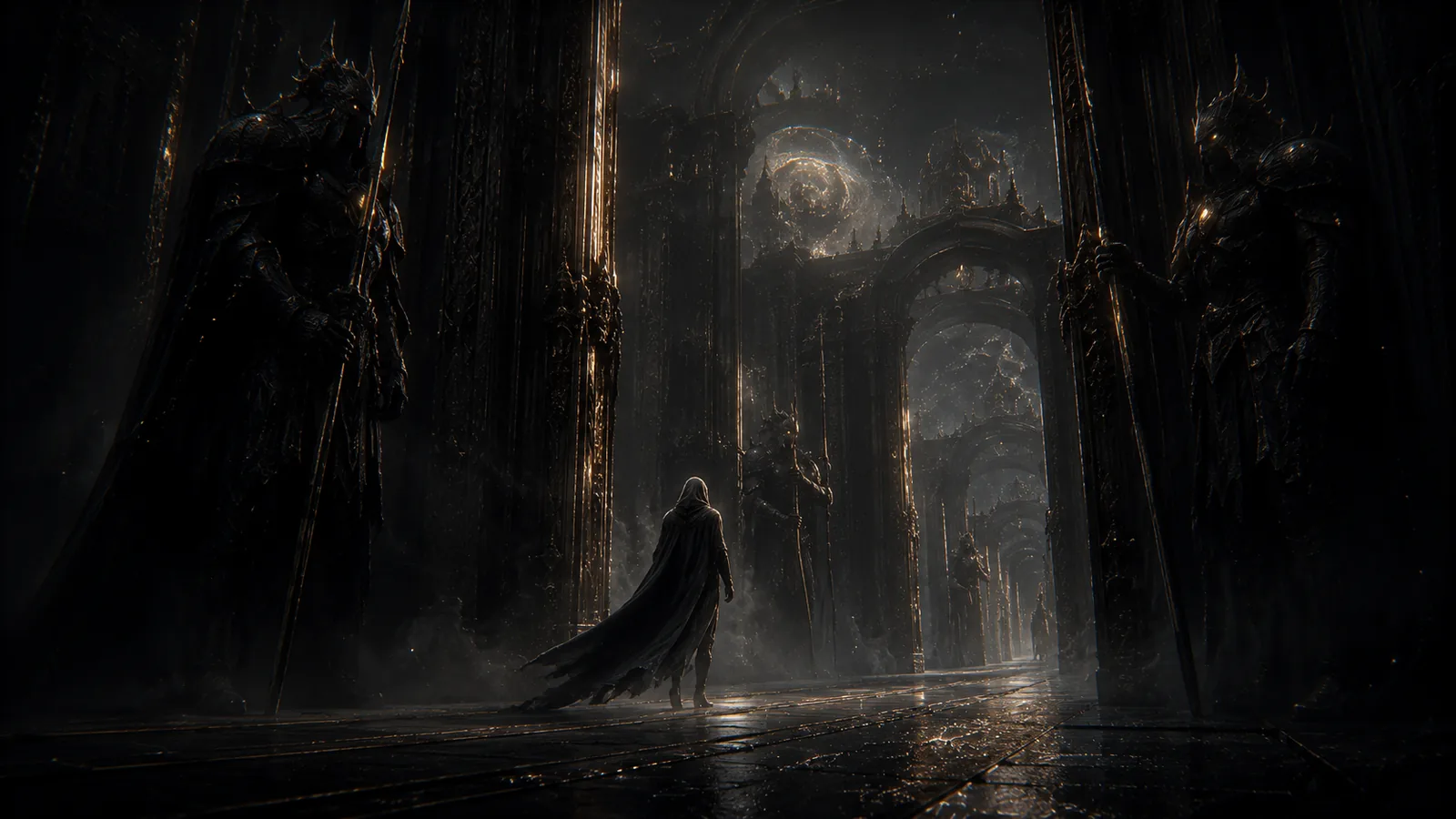
But the Twelfth Aeon was different. There Authades had felt the Savior coming, for the Self-Willed had eyes for anything that moved against his design, and something was moving now that he had not given leave to move. He loosed his greatest weapon: the same lion-faced light-power he had sent against Sophia, turned now against the one who had come to undo his work.
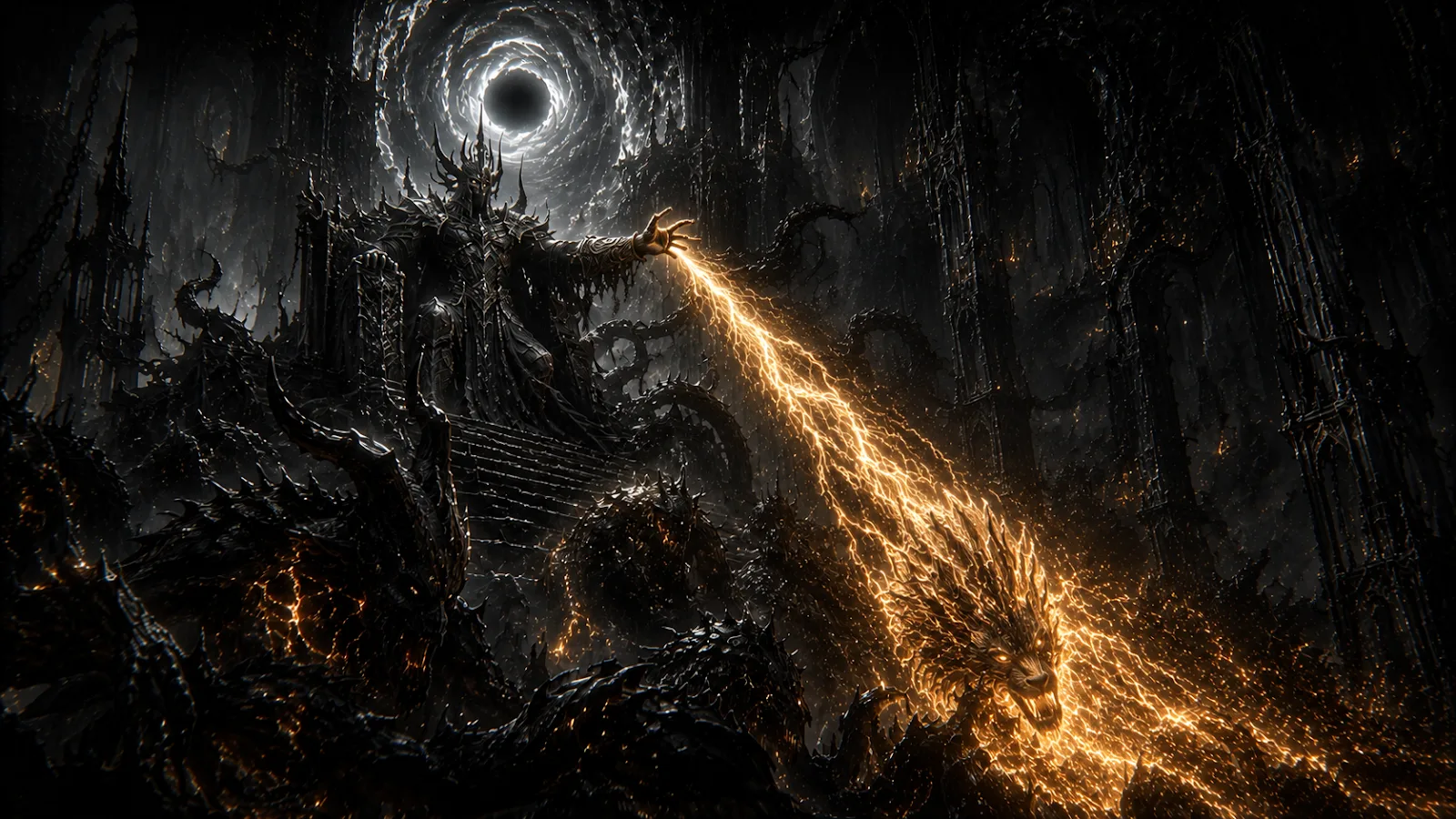
The lion-faced power rose to block the way, vast and terrible, already swollen with the portion of Sophia’s light it had devoured. It rose in the full confidence of a thing that has never been overcome. The Savior did not bargain with it, and he did not veil himself before it. He let his radiance go.
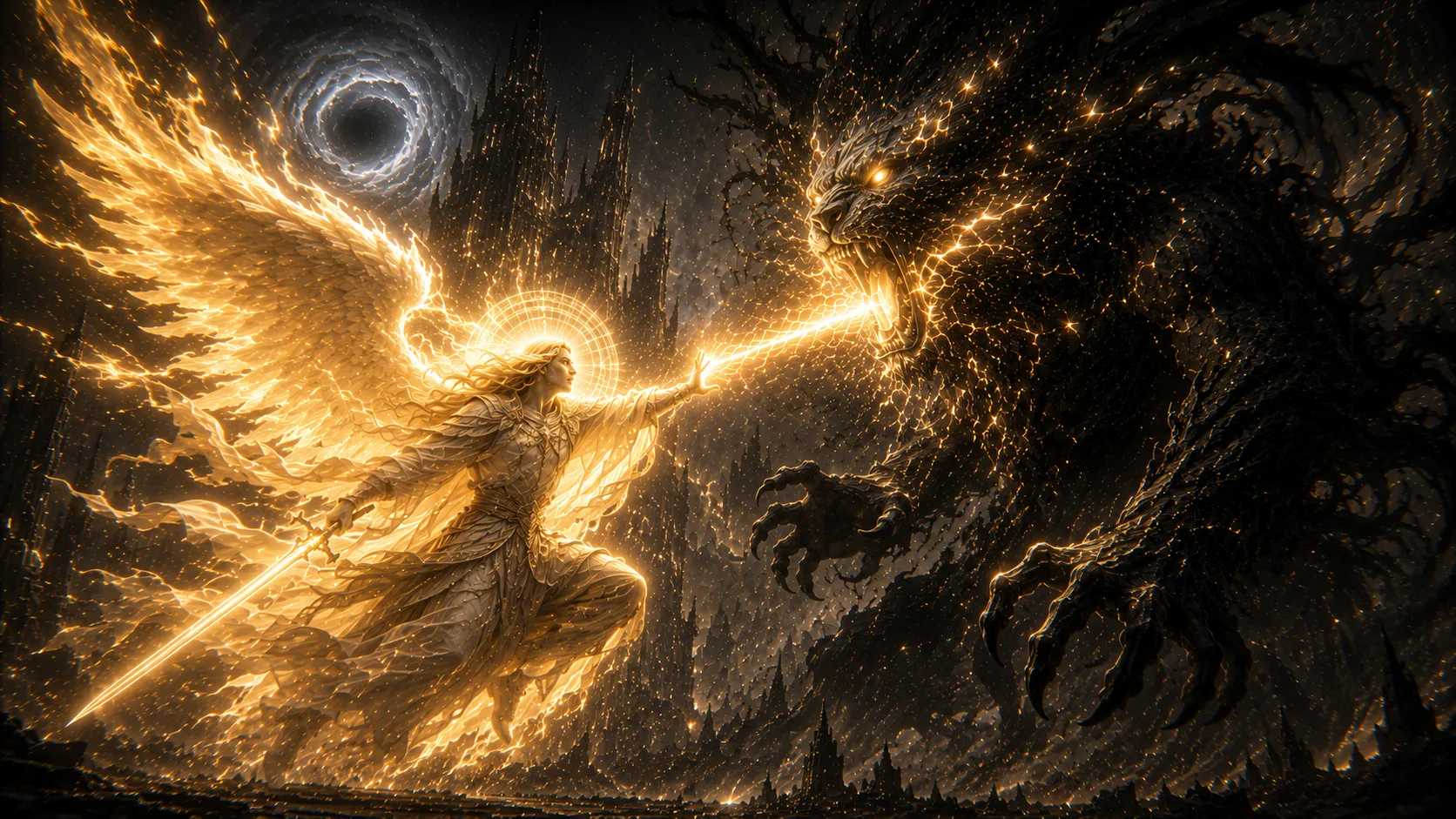
He set the lion-faced power beneath his feet, and drew out of it the portion of Sophia’s light it had swallowed, and added that light to what he carried.
“The power of Authades is broken. The Self-Willed has reached the limit of his will.
Through Chaos
Below the Twelfth Aeon the way opened into Chaos, and there the Savior let his full light shine without restraint, for there was nothing left to hide from. He moved through the dark, and before him the Archons of Yaldabaoth saw a light they had never seen and could not name: a light from the realm above, walking into a kingdom that had never known one.
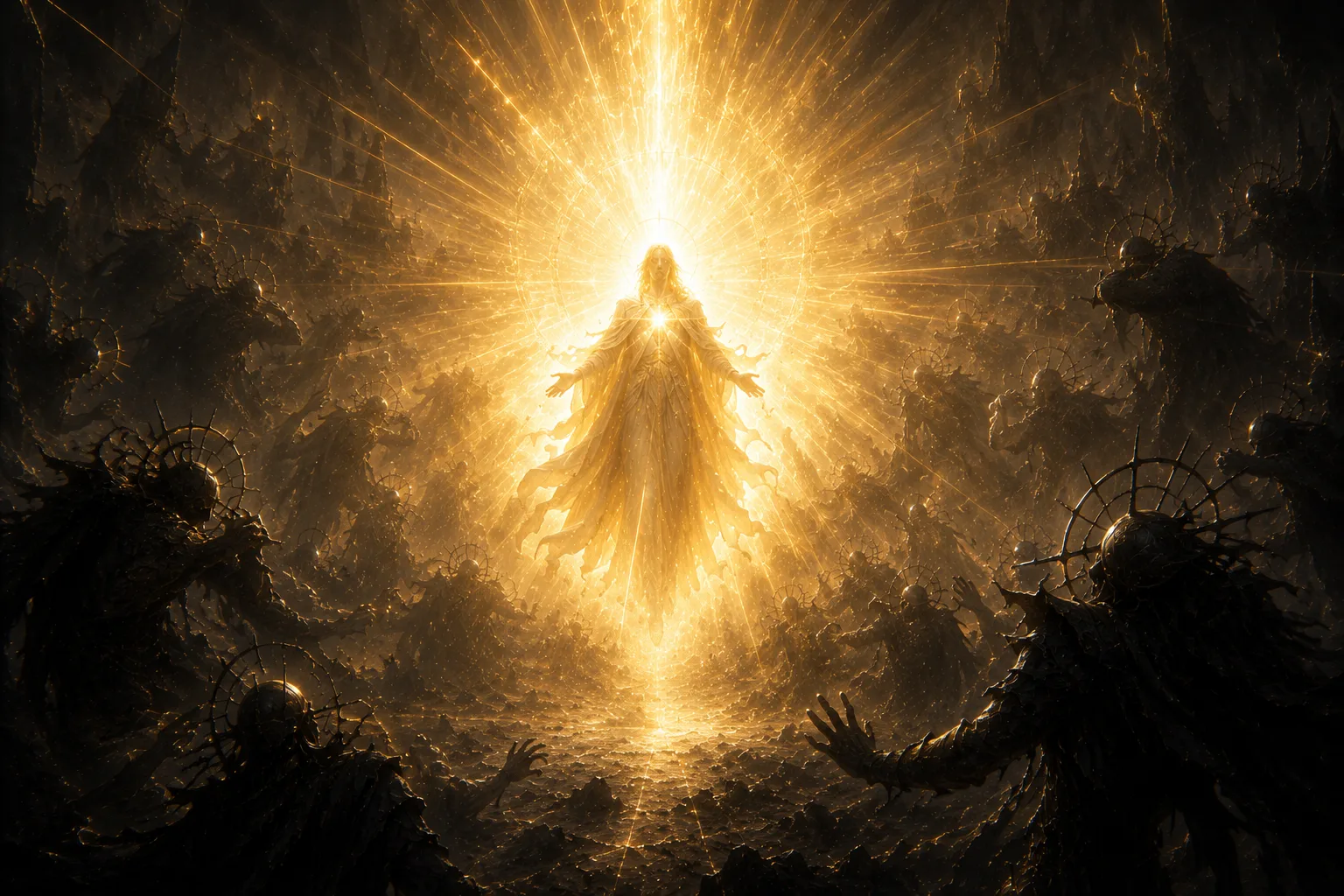
He did not go to the blind god first. He went to the stolen light first, for that was his charge. One by one he found the Archons that had fed on Sophia’s radiance, and one by one he took it back. They could not hold what was not theirs in the presence of the one sent to reclaim it; the light poured out of them like water from a tilted jar, and he gathered it in his hands, thread by thread, all that was still scattered through the dark, until everything Sophia had lost, here below and torn away above, was carried in the hands of the one who had come to return it.
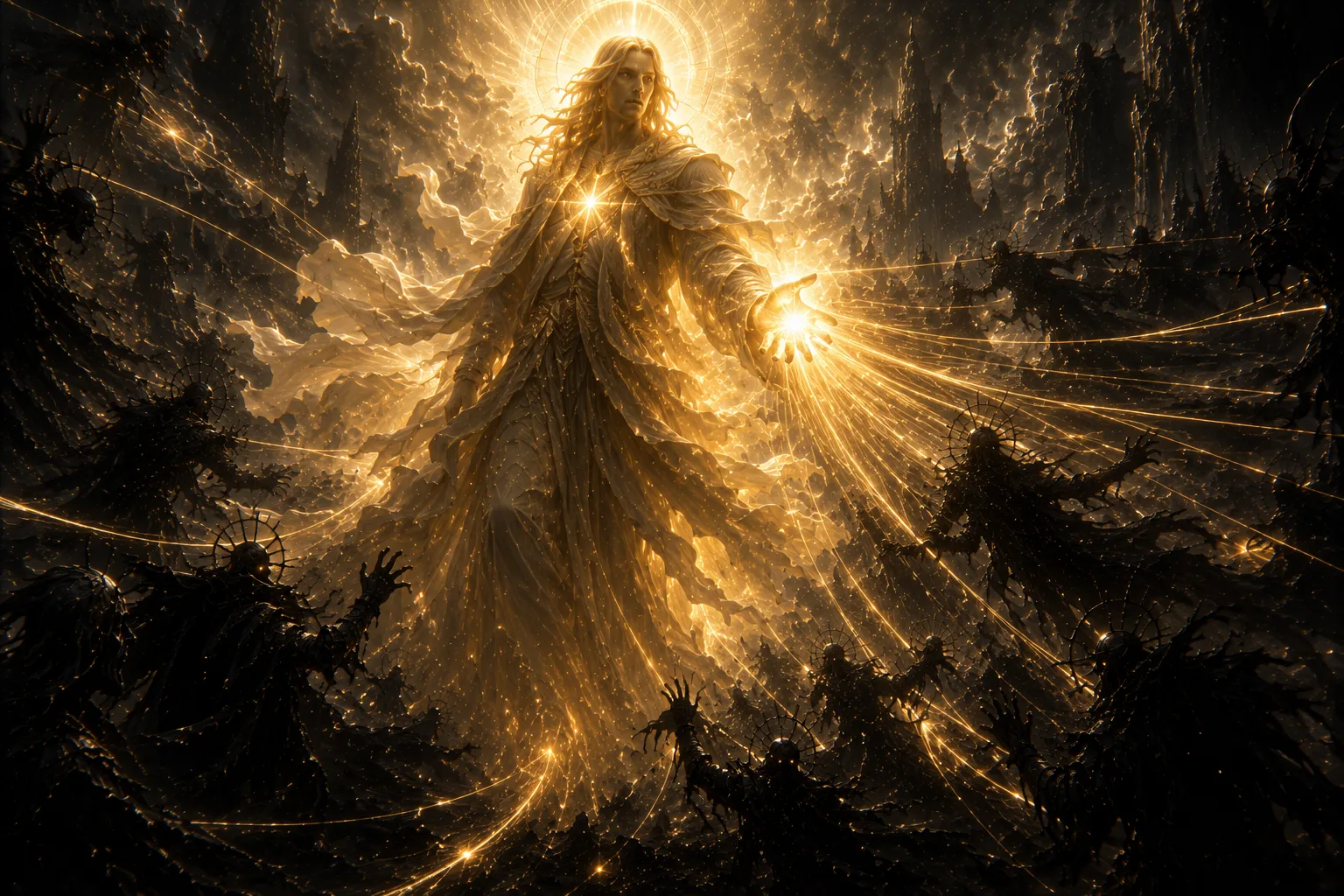
The Archons fled. And at the heart of his kingdom Yaldabaoth felt his servants scatter and his hoarded light pour away, and for the first time since he woke he felt something his certainty had never let him feel before. He felt small.
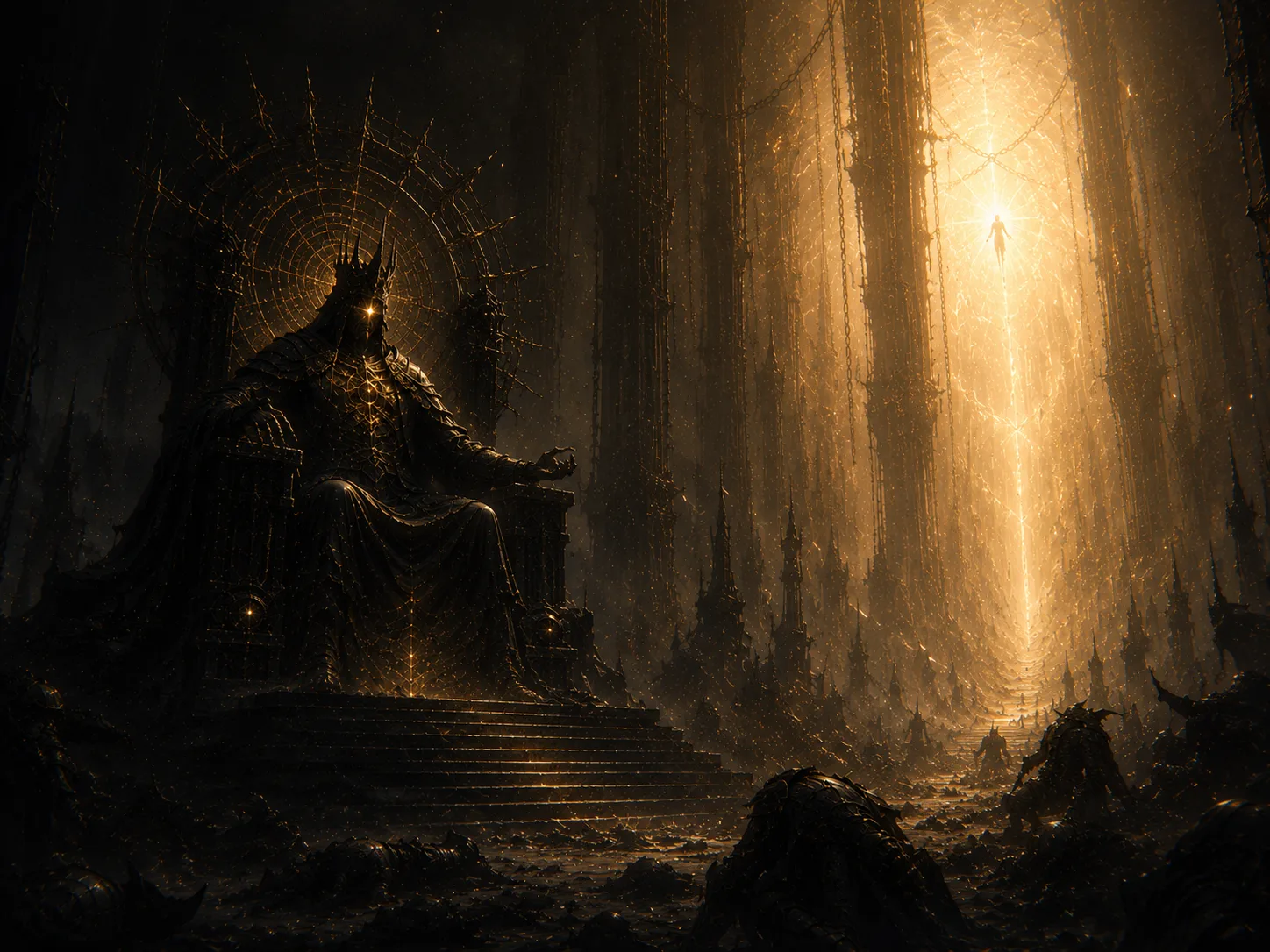
The Savior stood before the blind god and told him, gently, the thing he had never been able to see:
“You are not the first, and you are not alone. You were made, though you do not remember it, out of a light that fell from far above you. There is a Height you have never seen; and I have come down from it, for what you took.
Yaldabaoth had no answer. His whole dominion had rested on the one thing he was certain of, that there was nothing else; and here was the Else, standing in his own hall. He was not destroyed. He was only, for the first time, shown the measure of himself: vast within his own dark, and nothing at all beyond it. A shadow that had never once looked up to see what cast it.
The Restoration of Sophia
The light gathered and the Archons scattered, the Savior turned to the lowest place of Chaos, the last and deepest dark, where nothing had been put except what was meant to be forgotten.
He found her there.
She had been in the dark so long that her eyes had lost the habit of light. She did not know him; she could not see well enough to know him. She knew only that something was coming toward her out of the dark that was not dark, and that her last cry had been heard, and that the waiting was over.
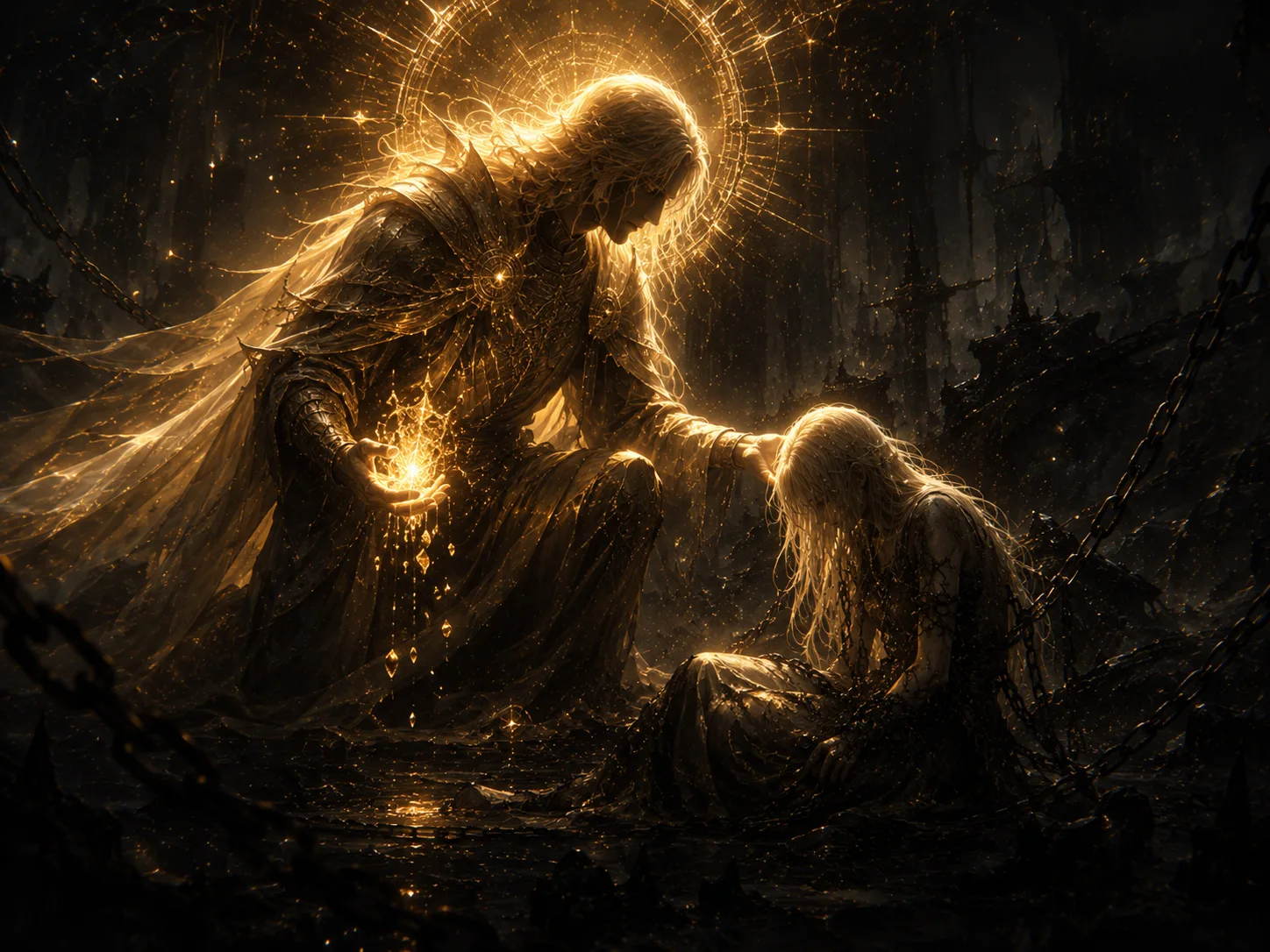
He loosed her bonds and lifted her up out of the lowest place. And then he gave her back what had been taken, thread by shining thread, all of it, everything stripped from her in the dark, everything scattered through the powers of Chaos and gathered again in the hands that had come to return it.
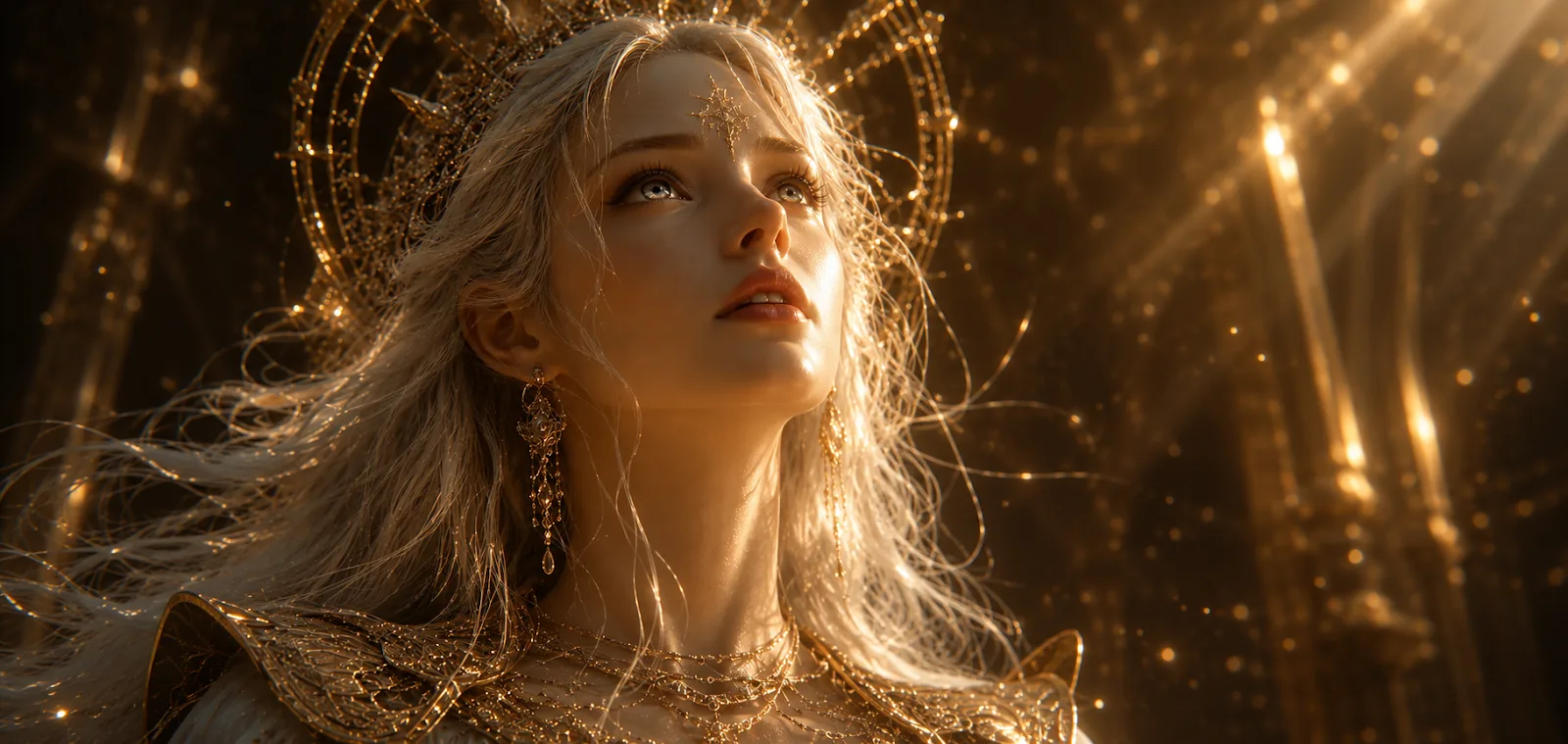
He gave it all back. And to the light she had lost he added the light of the realm above, poured over her by the one who carried it, more than she had brought down with her. Her wings rekindled. Her halo returned. The grey fell from her and the gold came back, and the gold was brighter than before, because it carried now what no Aeon of the Fullness had ever carried: the knowledge of the dark, and the memory of being lost in it, and the fact of having been found.
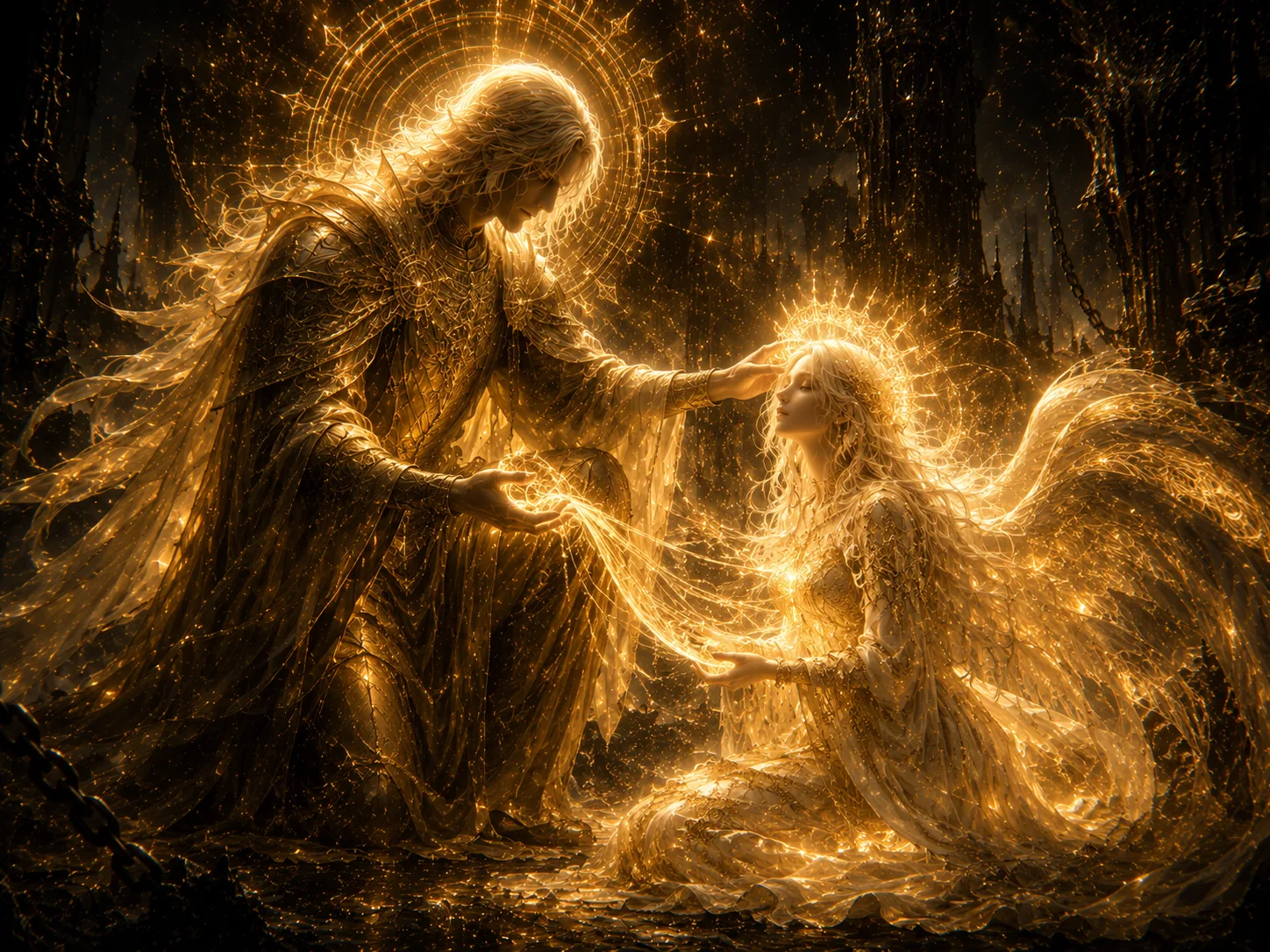
She who had fallen as the youngest and least of the Aeons rose now as something the Thirteenth Aeon had never held: a light that had been all the way down into the dark, and been found there, and come back, bearing the wound turned into wisdom. Which is what her name had meant all along.
“Not as she was, but greater, for having been lost, and found, and brought home by the one the Light sent.
The Way Home
Together they rose.
Up through the broken kingdom of Yaldabaoth, whose Archons could not bar the way a second time and did not try. Up through the scattered remnants of Chaos toward the ordered heavens. Up through the Twelfth Aeon, where Authades sat diminished, his lion-faced power broken and his stolen light returned, and could not stop them. Up through the remaining heavens, gate by gate, the Savior going before and Sophia following, the two of them climbing toward the Thirteenth Aeon she had left.
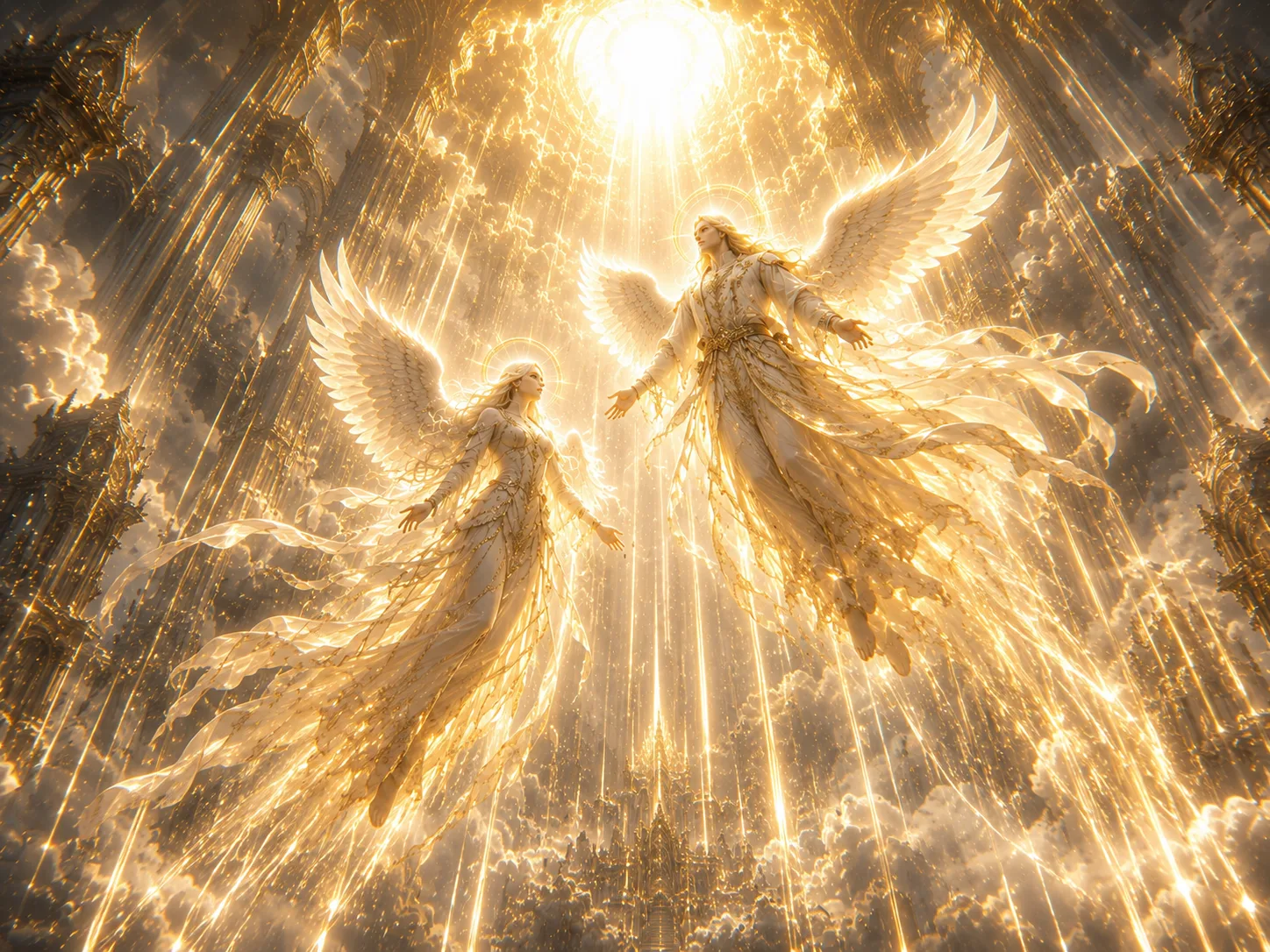
When she crossed back into the Thirteenth Aeon, the powers of her heaven felt the return of the light that had gone from it, and felt how that light had changed, brighter now, and deeper, carrying something that had not been in it before. And above the Thirteenth Aeon the warmth of the Pleroma swelled, as if the Fullness itself had turned toward its outermost Aeon to receive what the Light had sent down and was now bringing back.
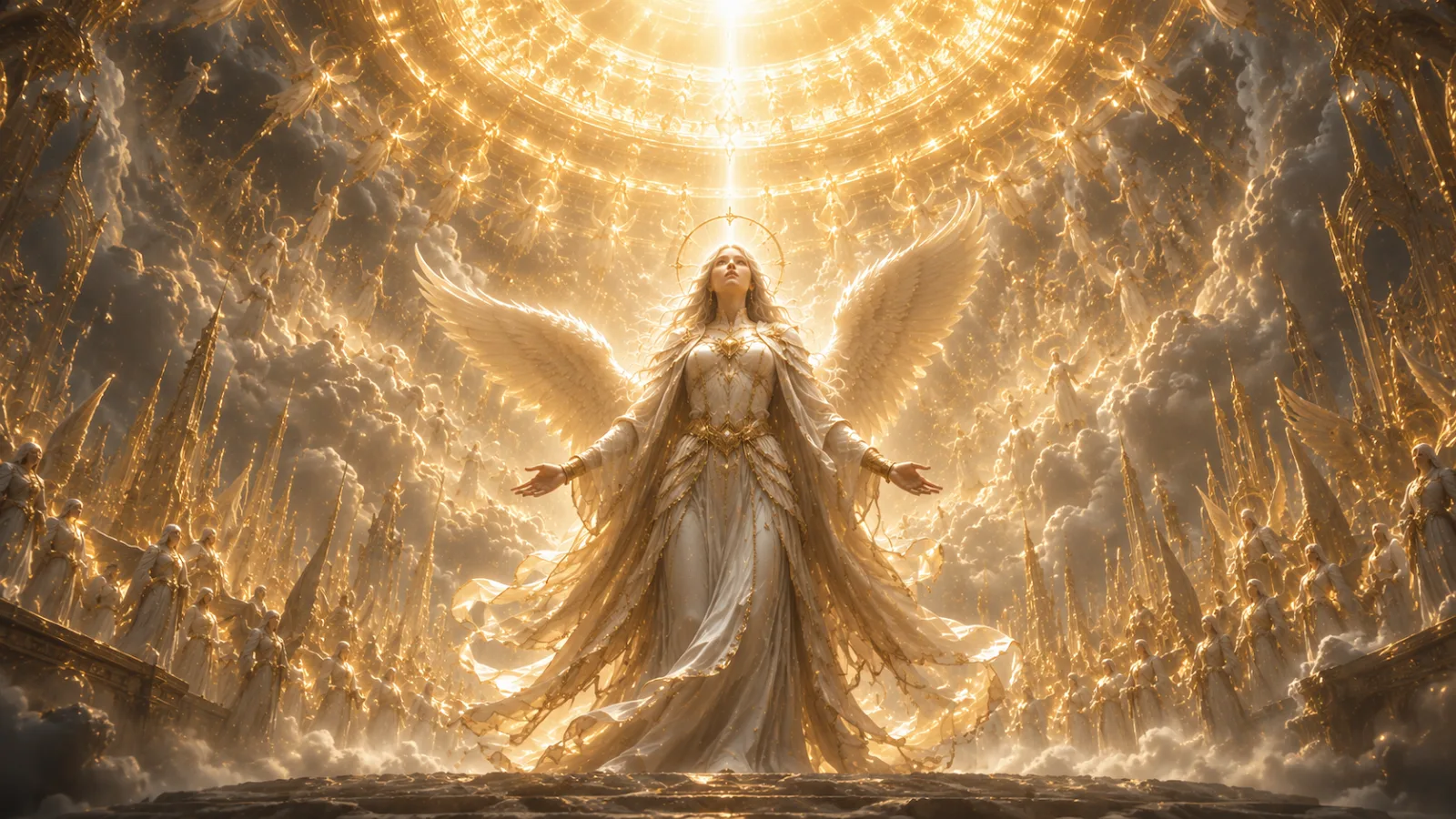
The Chorus had not stopped. It had never stopped. But now it took up again what it had been missing since she fell: her voice, returned, and changed. An Aeon who had been to the dark and come back, who had learned in the lowest place what cannot be learned in the Pleroma, and who carried now a kind of wisdom the paired Aeons in their unbroken perfection had never needed, and never sought.
The way up was open. The Light had shown it.
And It Ends In You
Yet the story does not end in the Thirteenth Aeon.
It ends, the Gnostics say, in you.
When the powers of Chaos tore Sophia’s light apart thread by thread, not every thread was gathered back at once. Some fell further still, past Chaos, past the ordered heavens, down into the world of matter and time and forgetting, into the creatures who would one day be called human. Each of them carries a fragment of the Fullness: asleep, and forgotten, and waiting.
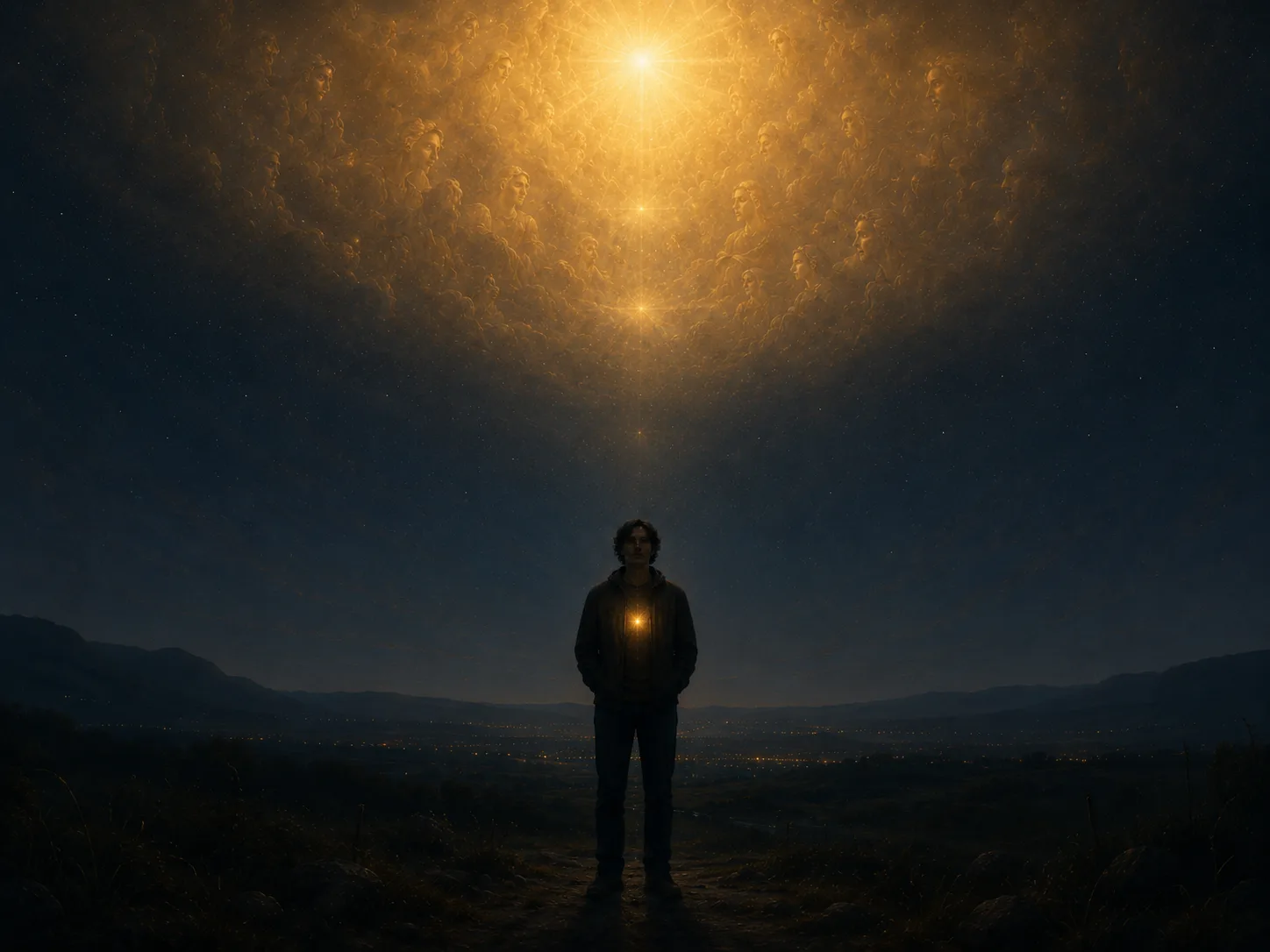
That spark is not yours because you earned it. It is yours because you came from the same Light that made Sophia, and no power in all of Chaos has ever been able to remove what the Light set in a thing at its beginning. It has been dimmed, many times, by many dark powers. It has never been put out.
And the same Savior who went down into the lowest dark for Sophia goes down still, for every spark that turns and calls. Not because you have done enough. Not because you have found the right doctrine, or the right ritual, or the right knowledge. Because you turned. Because you called. Because the Light does not abandon what it made, however far it has fallen, however long it has been lost.
The thirteen repentances of Sophia were not a formula. They were a turning. She turned, in the dark, toward a Light she could not see, and the Light came.
You can do the same. Now. In whatever dark you are in.
Something in you already knows this. Something in you has always known it. It is the oldest thing in you, and the quietest, and the one that survives everything the world strips away.
It is the spark.
And the Light is already on its way.